A Weekend Sketching trip to Naples
When George Saumarez Smith and I were contemplating where to go for a sketching trip, various cities were suggested but I wanted to go somewhere that I had not been to. Naples fitted the bill for both of us, although I had been there as a student back in 1991 but it did not count. I was living at the British School in Rome for a few months, and a girl who I have since lost touch with invited me down for a weekend. I stayed with her family, none of whom spoke English, an Italian grandmother sat in the kitchen pressing pasta into shapes with her thumb, like a mass-produced cottage industry using only muscle memory. I was looking forward to the greatest pasta supper of my life, which it was, although the entire apparatus for eating, the plates, the cutlery, the tablecloth, and the glasses were all disposable and swept into a black bin bag at the end of the meal. I don’t want to sound ungracious, but I would have traded the quality of the food for more permanent knives and forks.
On that occasion, I did not really see Naples’ art and architecture at all, it was more night clubs and pizza. Although, I got to the Archaeological Museum just before it closed, a guide took pity on me and kindly took me round, but I literally only had five minutes in there. Unfortunately, he was only interested in showing me the more sexual Roman sculpture in the collection, which was not specifically my taste. But I did realise this was an amazing collection that I needed to visit properly one day.
George had never been to Naples, not even slightly.
On arrival we headed straight for the aforementioned Archaeological Museum (Museo Archeologico Nazionale di Napoli), I needed to bank that first and it did not disappoint. This is well known as one of the greatest collections of Roman sculpture in existence. In the high halls you can see room after room of the finest Roman sculpture:- emperors in armour, gods and goddesses, dogs, dolphins, vases and architectural fragments. Not that I was looking for it, but I could not see the more lurid sculptures of goats being taken advantage of, perhaps people find them triggering or maybe they do not want to give people ideas.
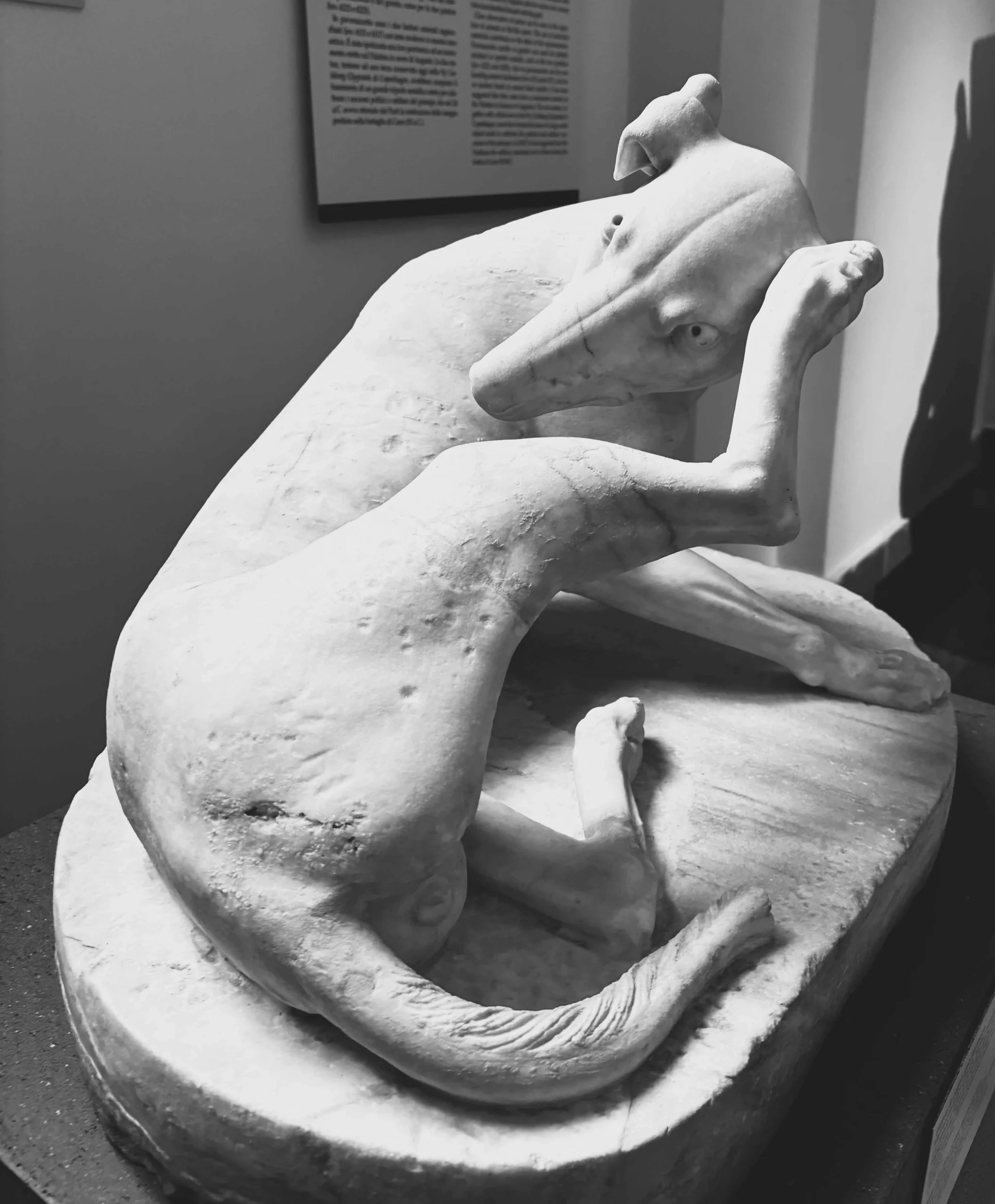
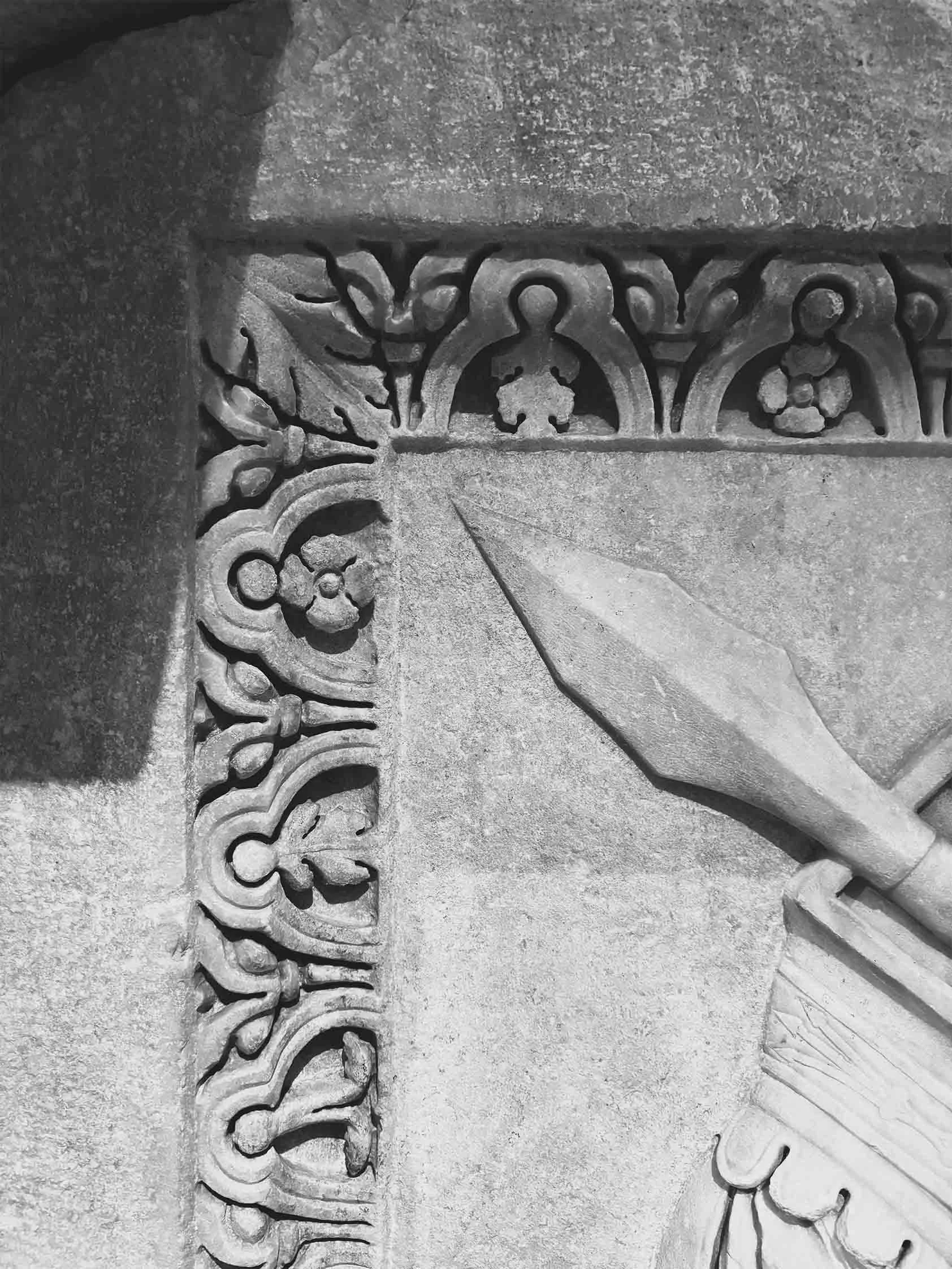
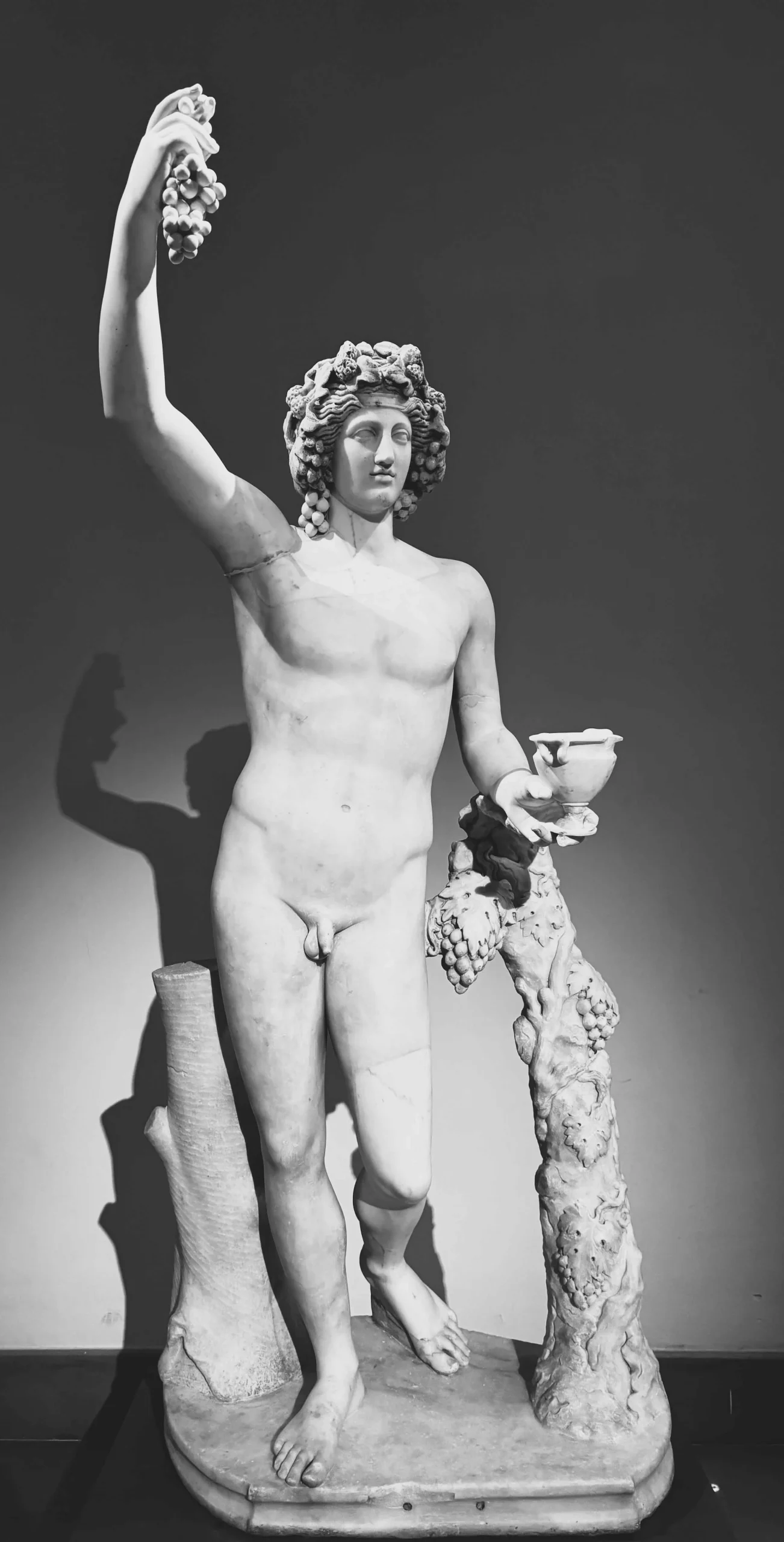
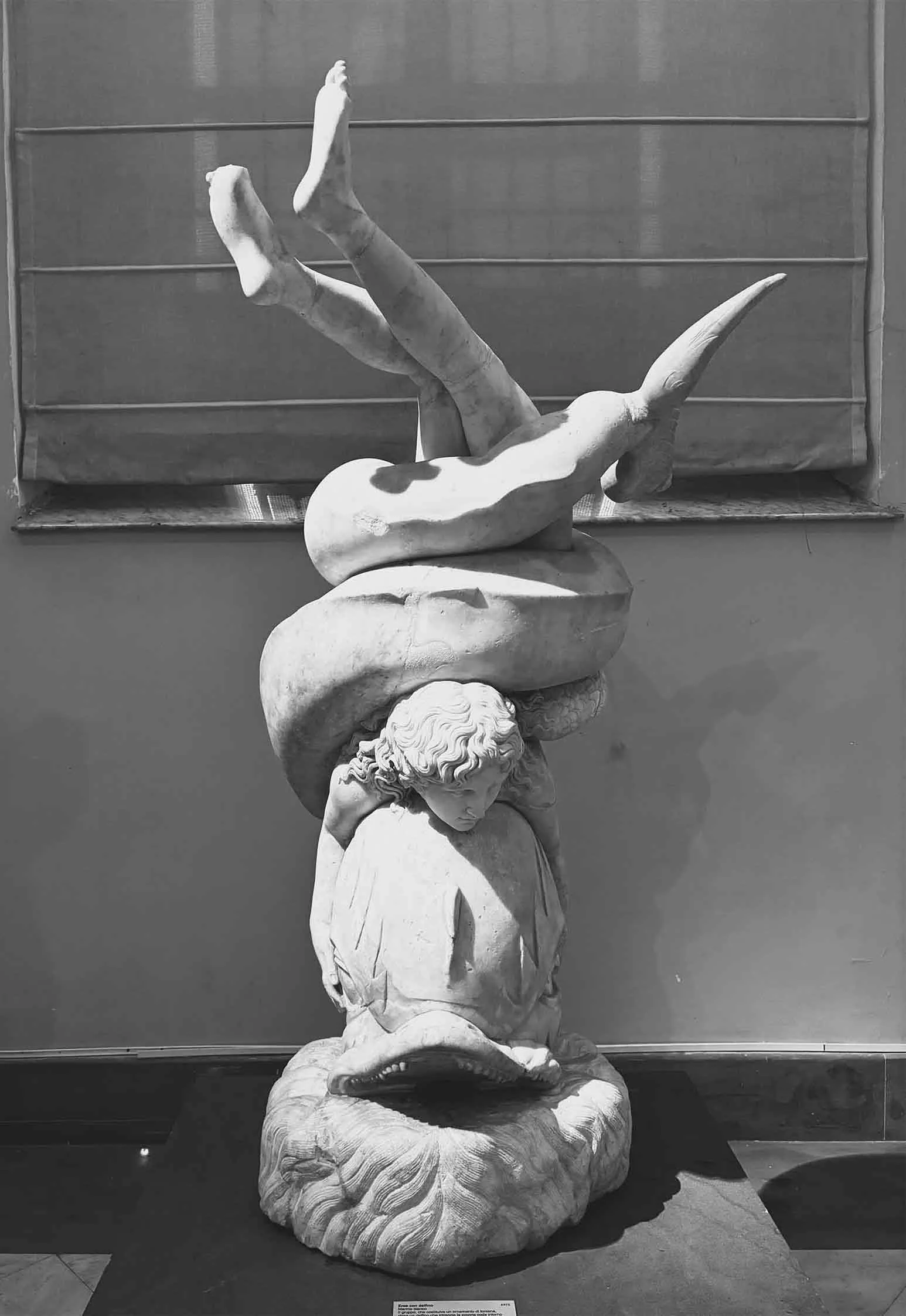
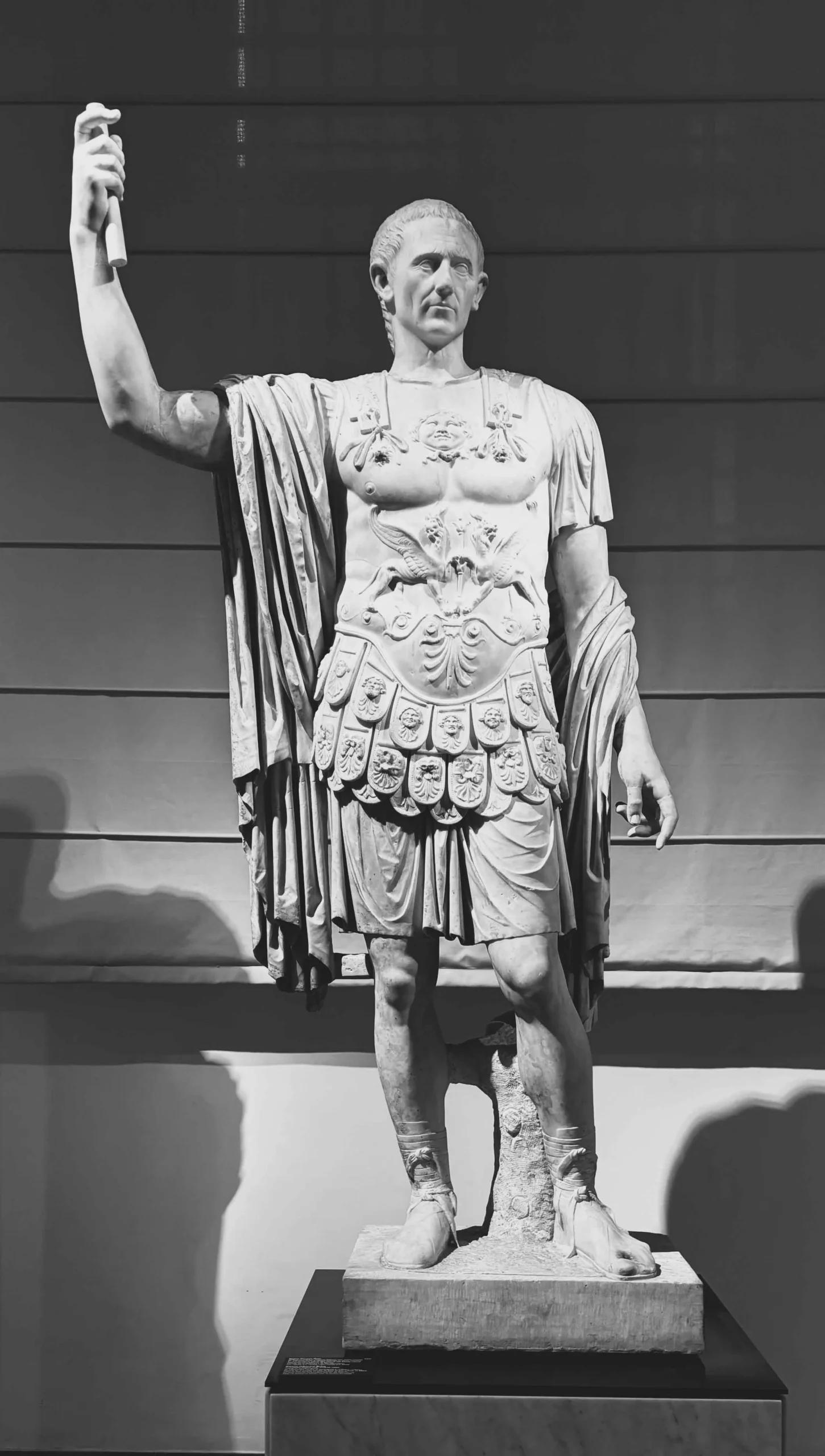
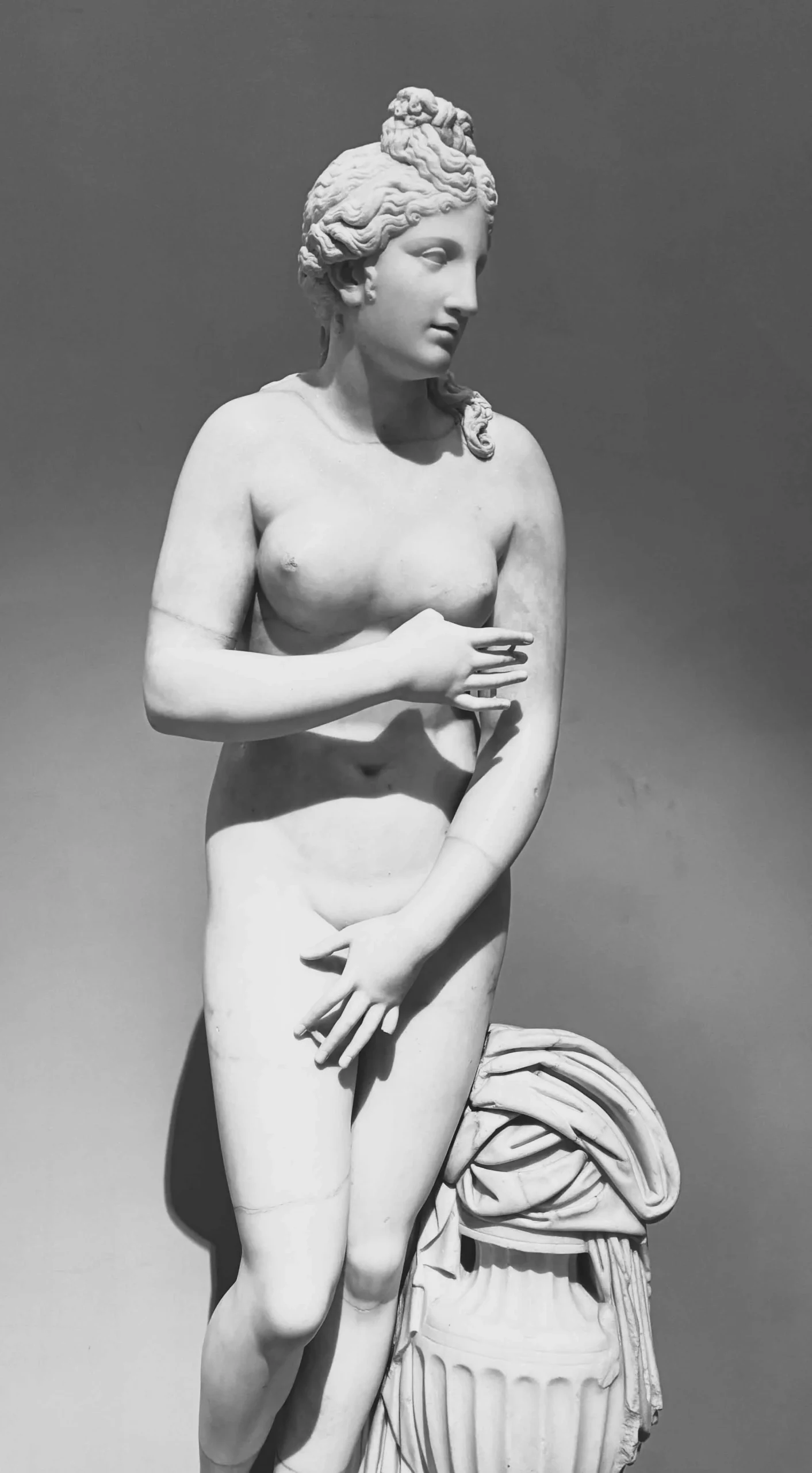
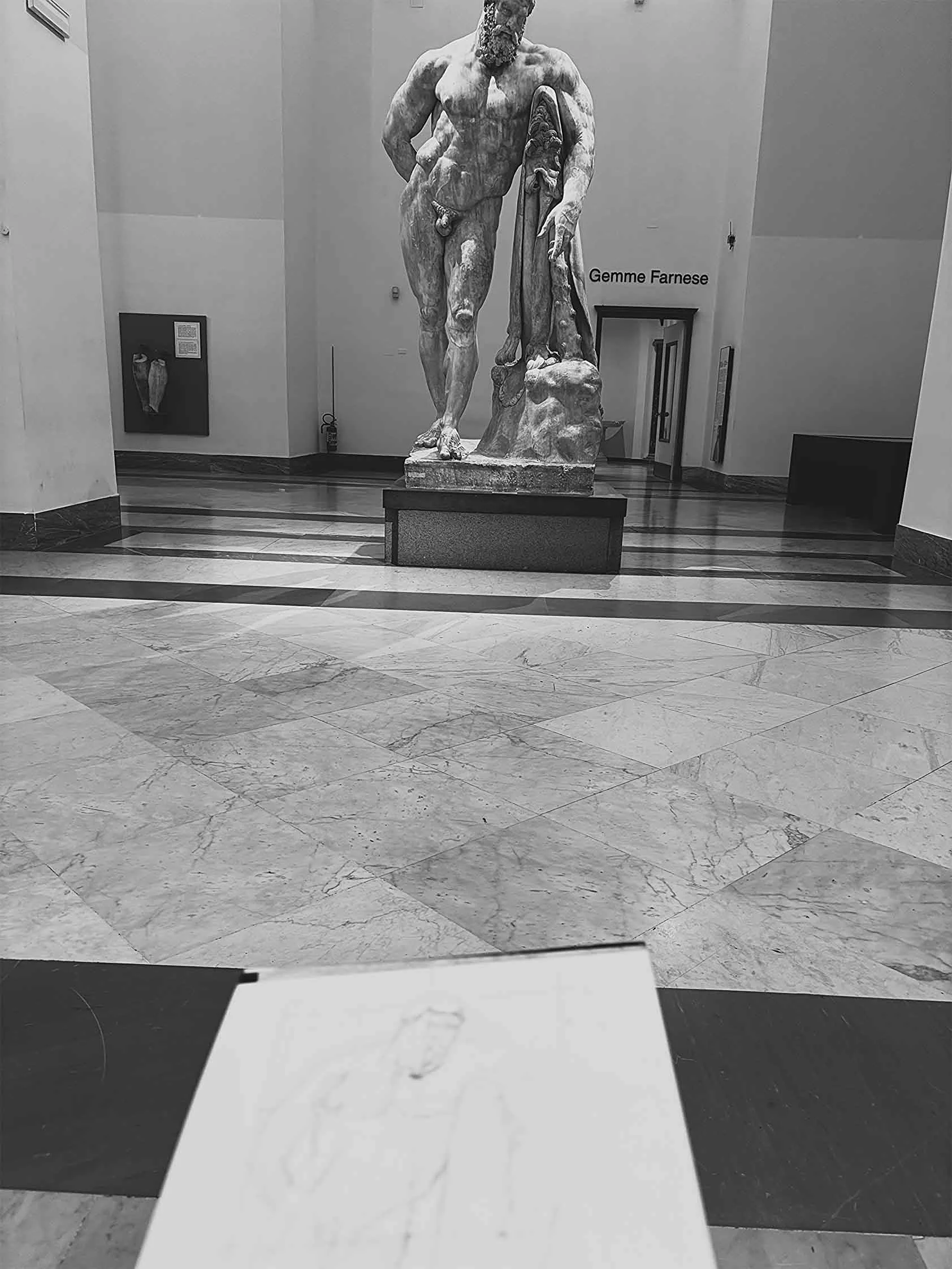
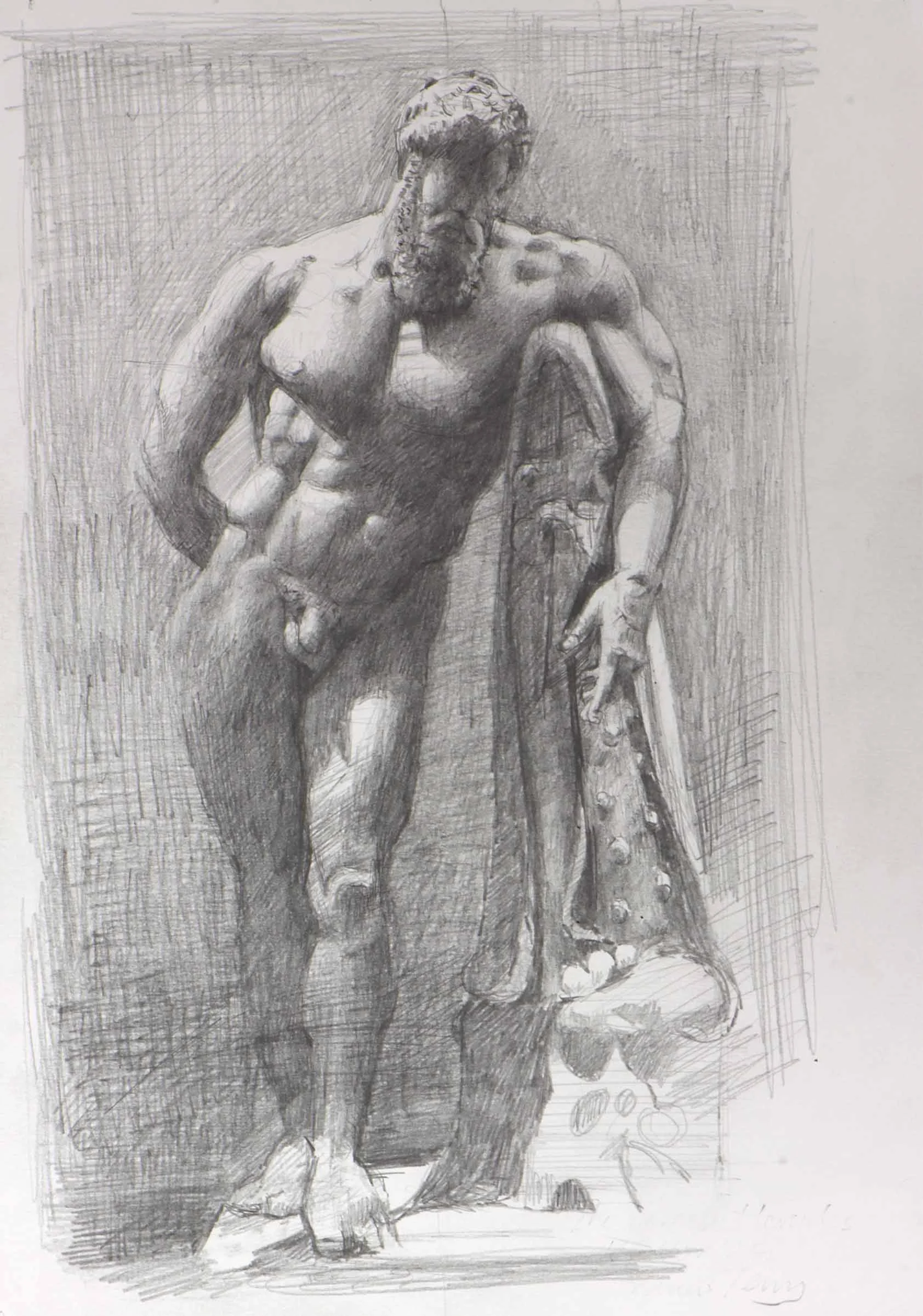
The Farnese Bull and Hercules were the two standout pieces. I sketched Hercules, which is an incredible work, his super-hero torso like a gnarled old oak tree leans supported by his left arm, propped up with his club. His weight is on his right leg which throws his right hip up and his left leg is forward. It is a masterful essay in the contrapposto pose. It did slightly annoy me to see a steady stream of tourists posing for selfies with him while cupping his balls, my guide of thirty years ago evidently knew his market.
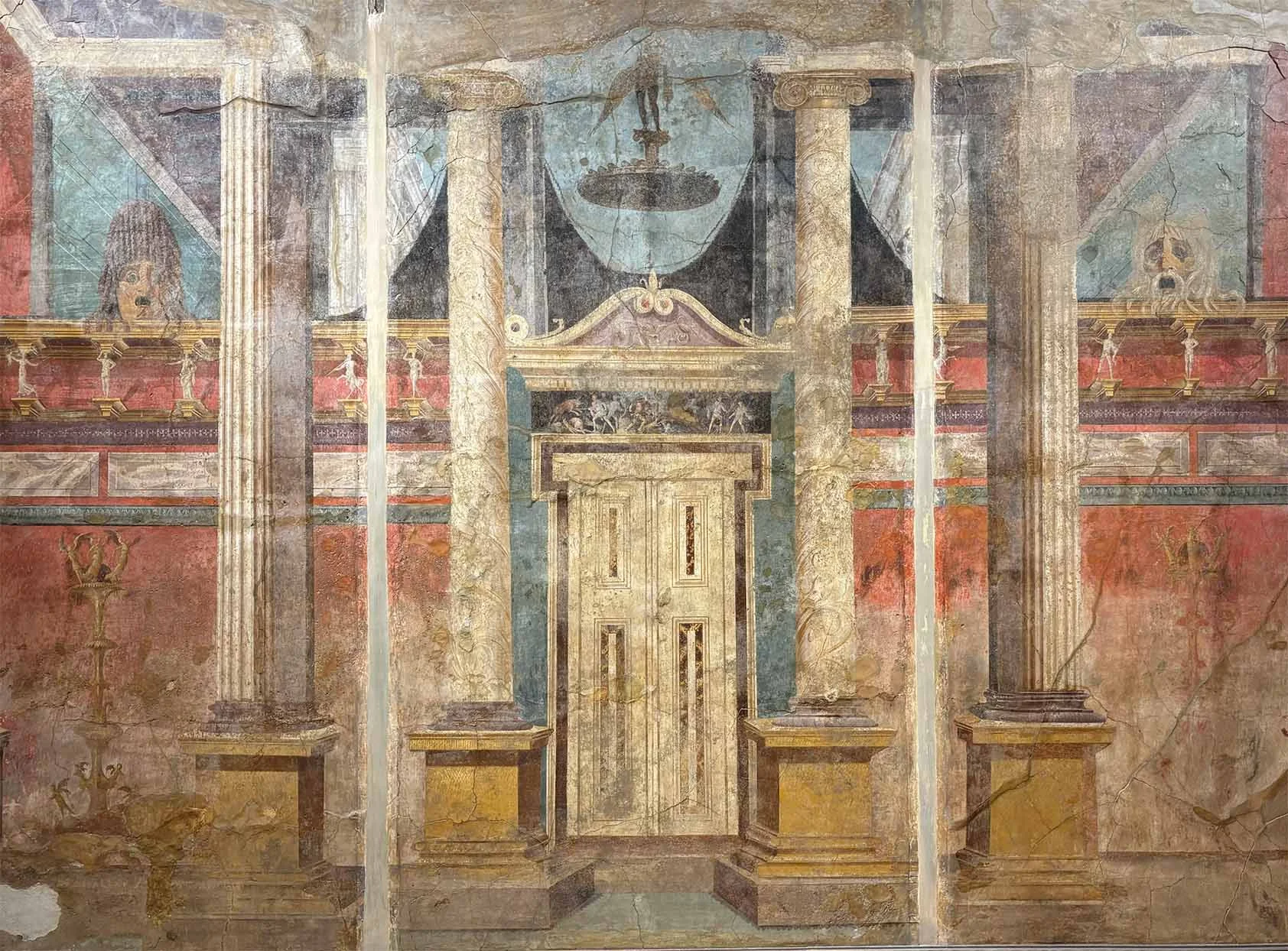
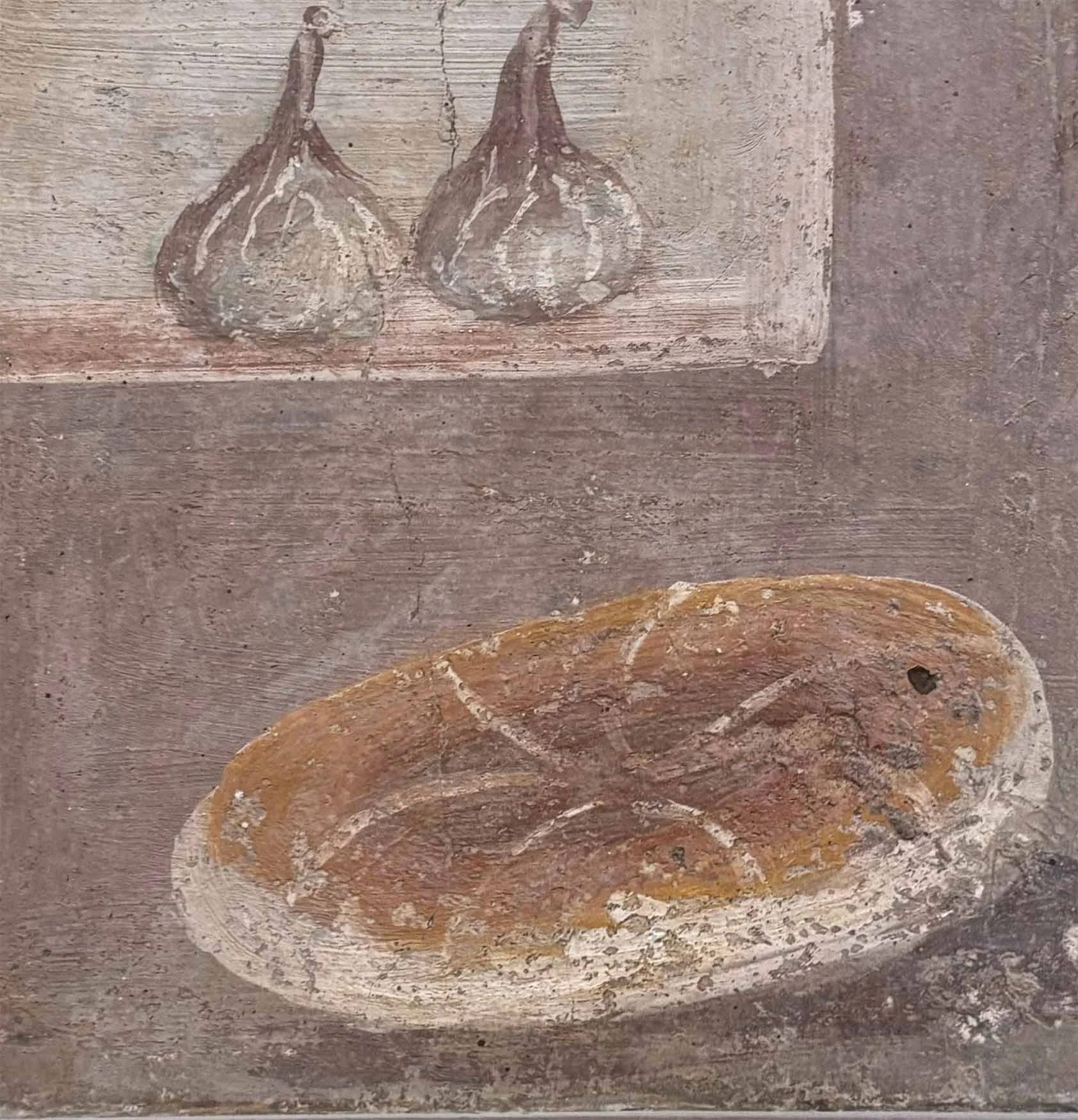
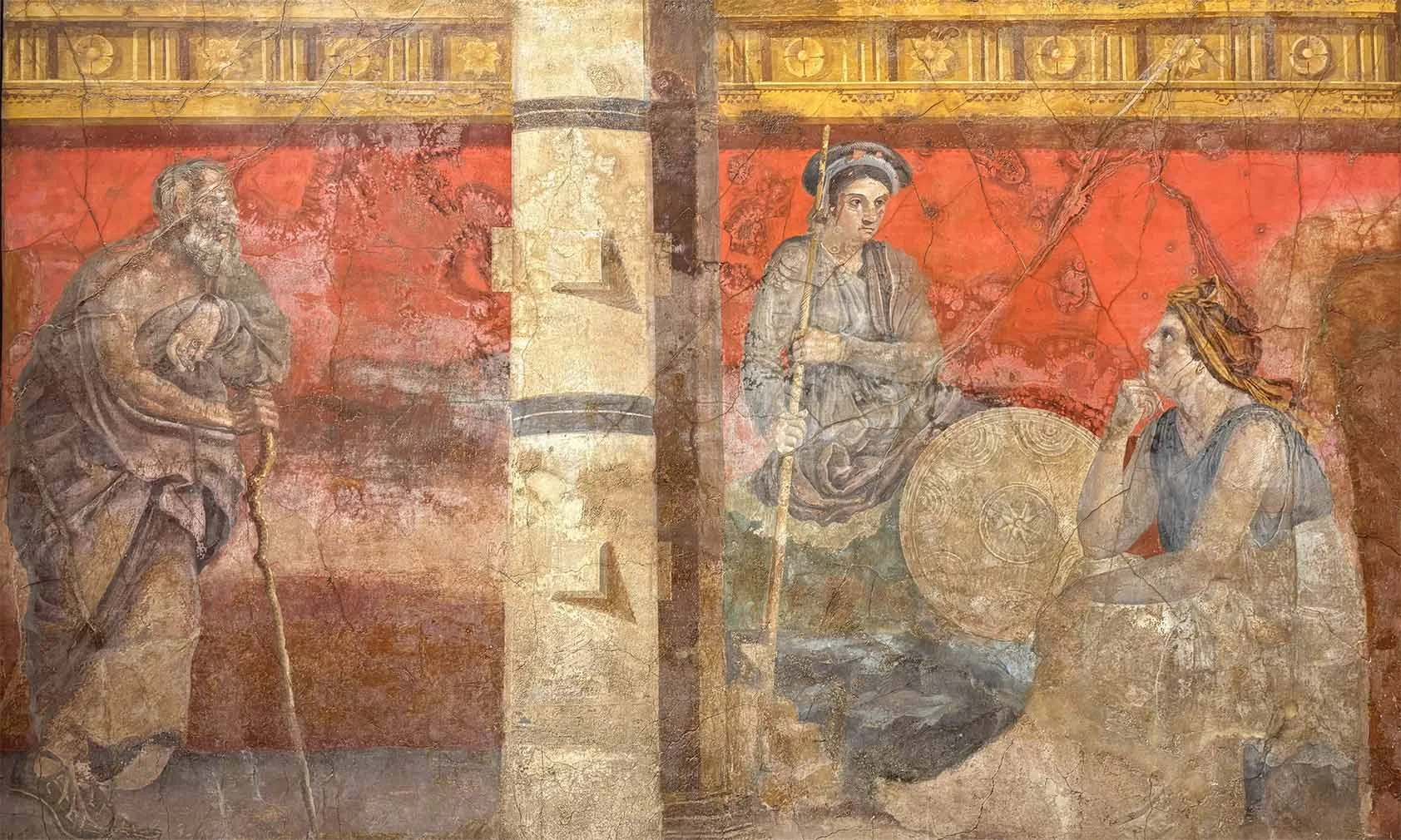
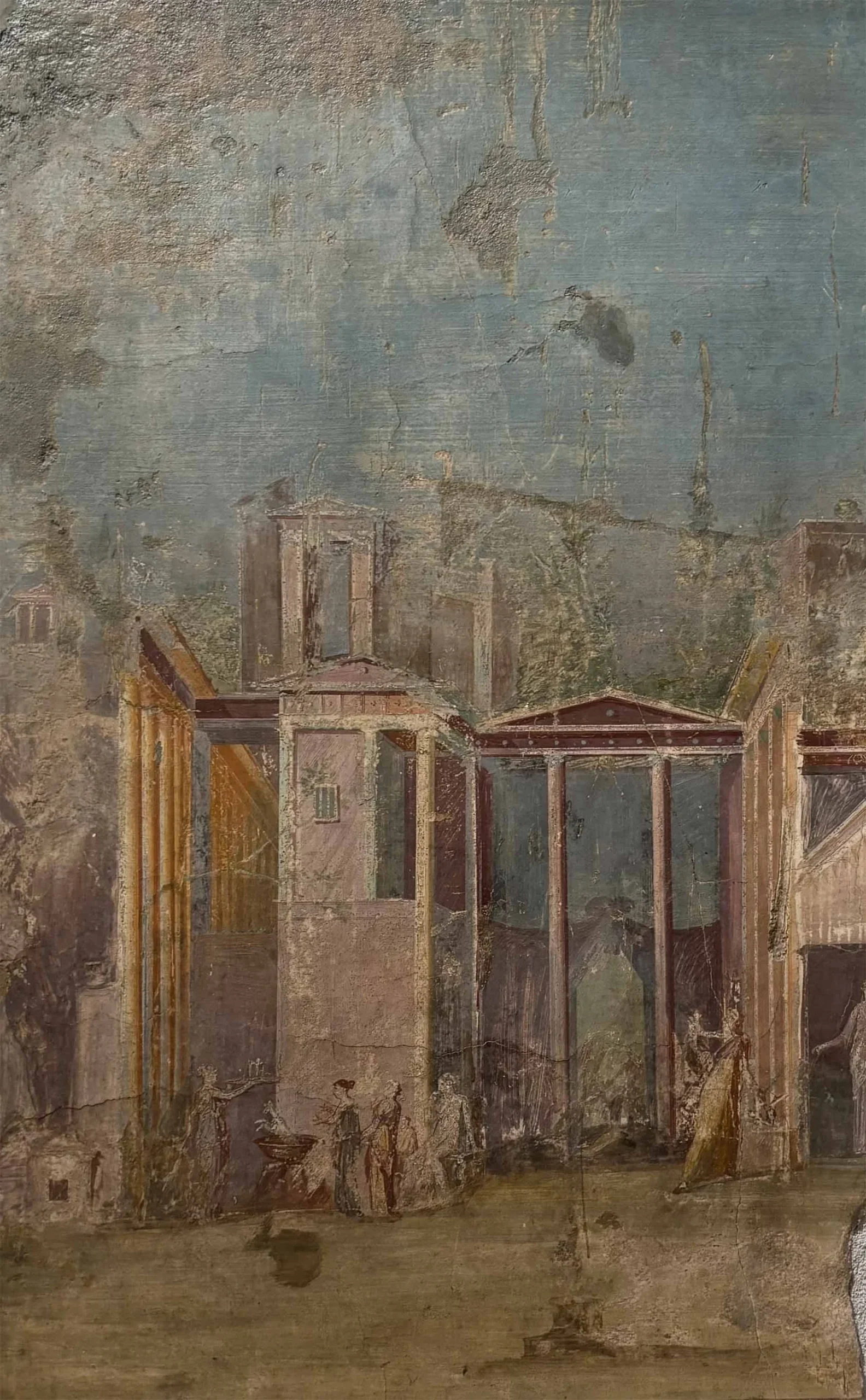
But all this is only the ground floor. Above is a floor full of the most incredible Roman paintings, bronze figurines, bronze furniture and marble lion table legs all from Pompeii and Herculaneum. I love Roman paintings, they are beautiful and decorative, but they do not make my hair stand on end like the sculpture does. In my opinion, technically, they are not hugely accomplished. Here we are not seeing Titian, Tiepolo or John Singer Sargent. Unlike the sculpture, if Michelangelo carved Hercules it would be one of his better works.
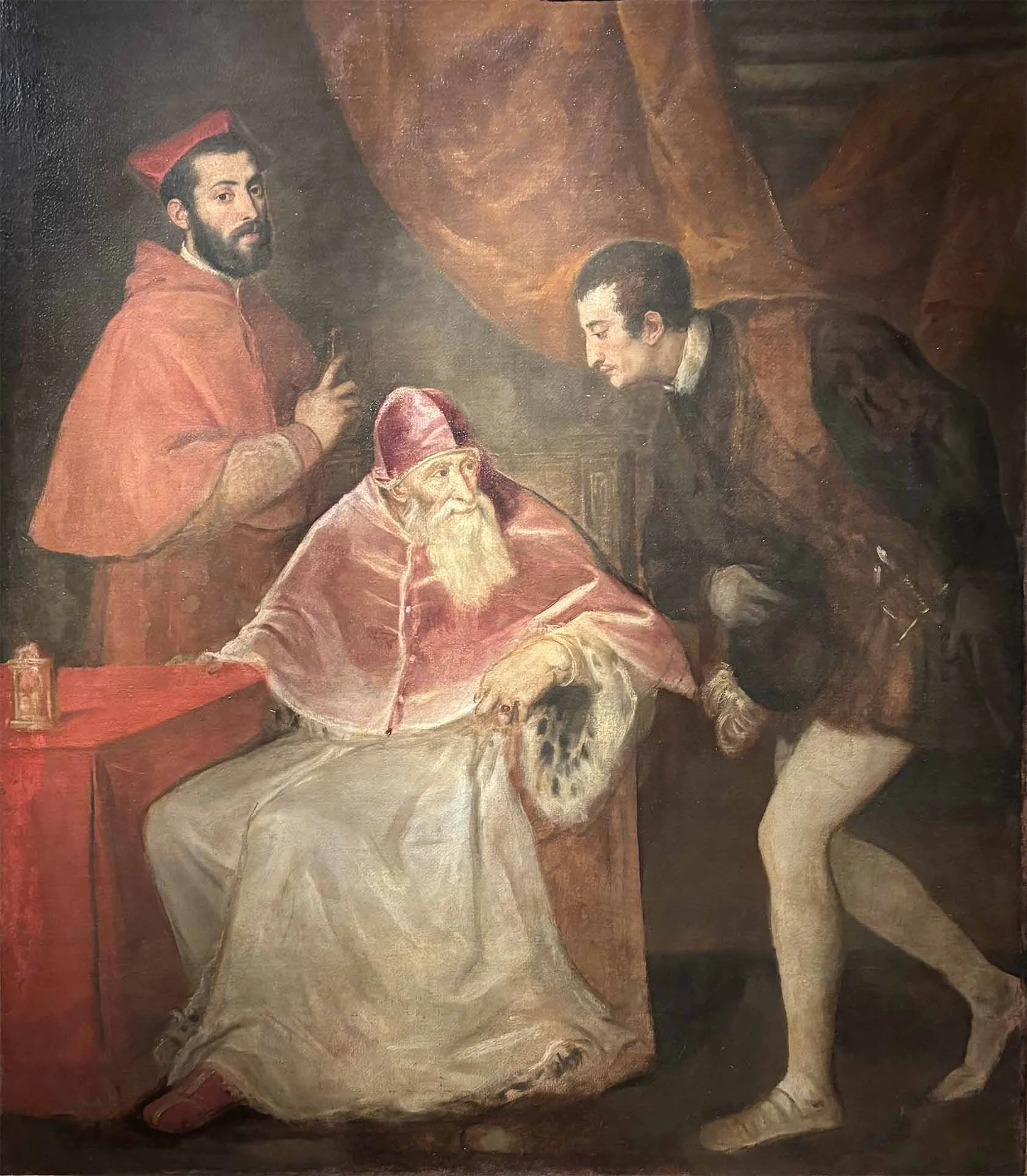
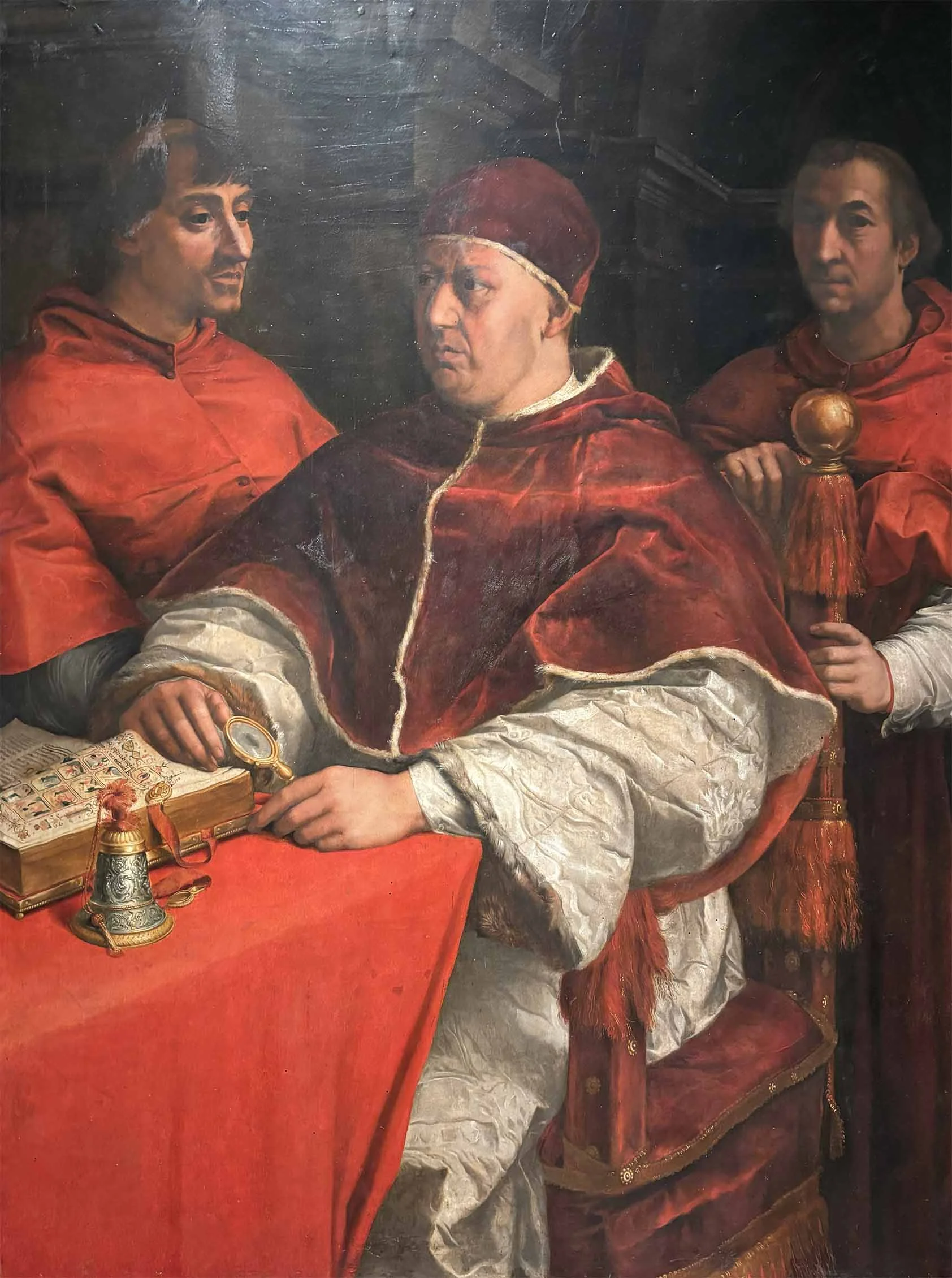
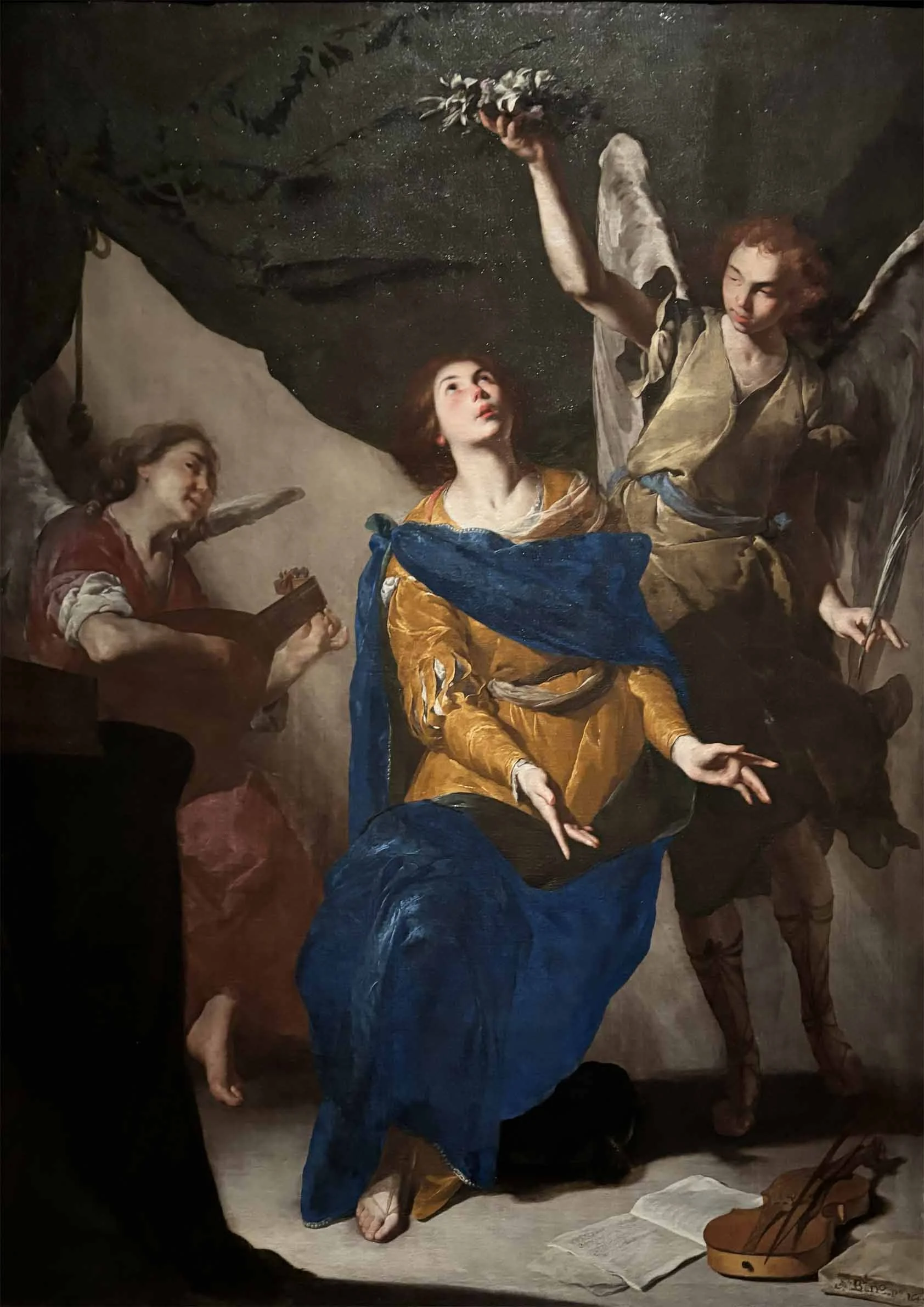
The next day we visited the painting collection at Museo e Real Bosco di Capodimonte. Here are some of the greatest works to ever be committed to canvas. It has Raphaels and Titians by the room, as well as great work by Bellini, Mantegna, El Greco and Carracci. Andrea del Sarto’s copy of Raphael’s Portrait of Pope Leo X with two Cardinals is incredible, like Raphael’s friend and assistant Giulio Romano, I thought it was the original, an easy mistake to make, and having looked at the original online, I think I prefer the copy. Another painting of a similar subject is Titian’s ‘Pope Paul III and His Grandsons’. I particularly enjoyed the figure on the right with the long nose; he weightlessly springs on to the stage like a character in an Edward Ardizzone illustration. The pope looks cunning, scheming, perhaps political, but certainly not pious and it does display a certain hutzpah to be painted with one’s grandchildren given that Popes and Catholic priests have been required to be celibate since the 11th century.
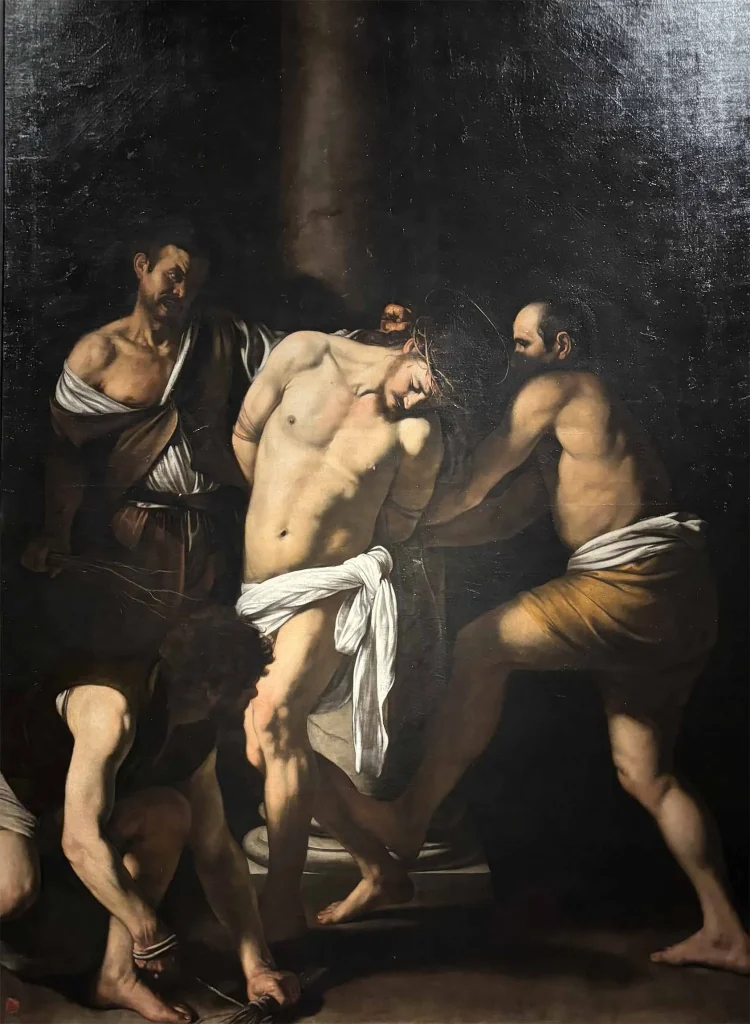
But the greatest painting in the gallery must be the Flagellation of Christ by Caravaggio. Christ stands, again, like Hercules in contrapposto stance, a marble column and base behind him bisecting the composition. This should not work but it does. A bright white loin cloth attracts the eye, partly blocked from view by a crouching figure whose head is completely in shadow.
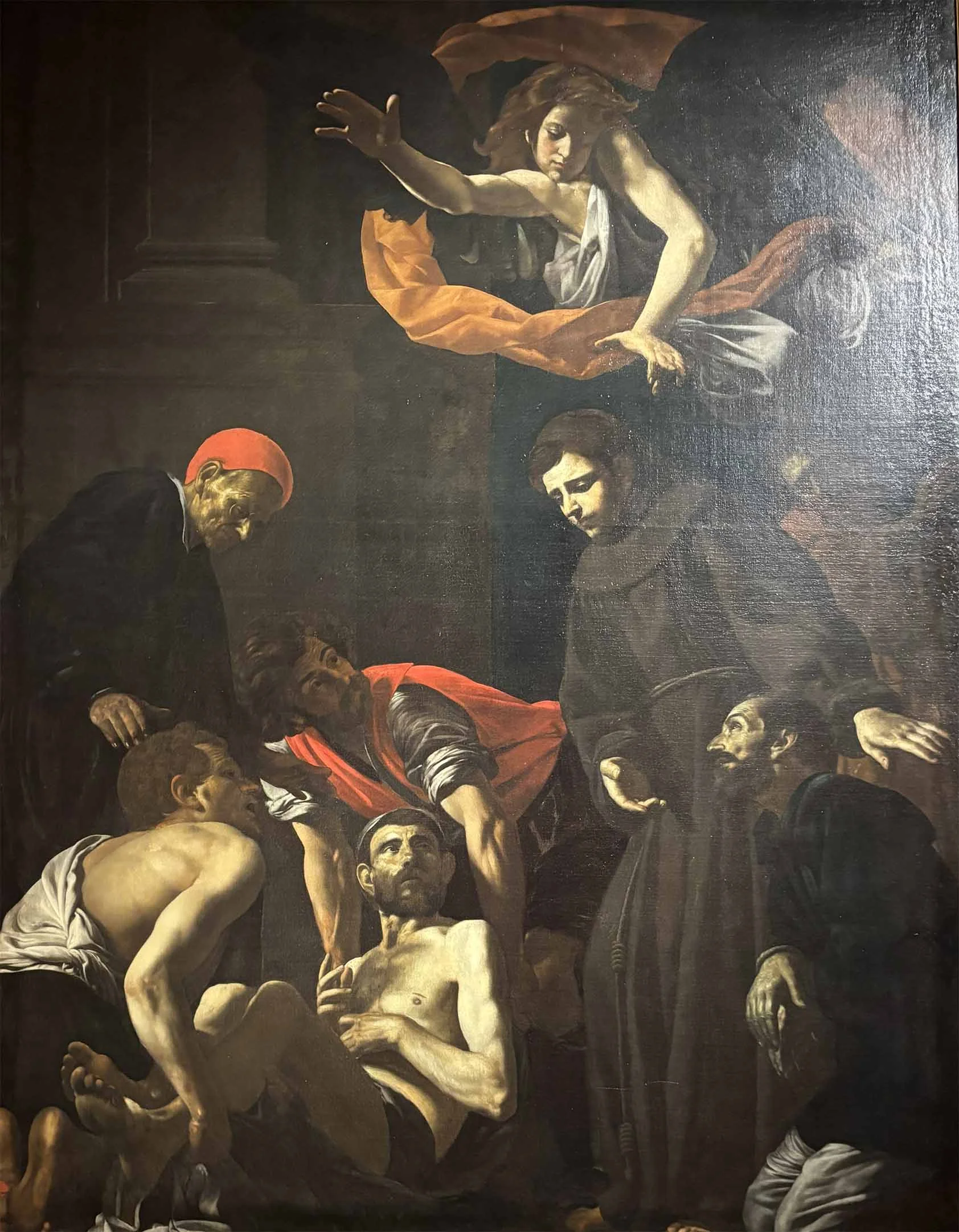
Following this is room after room of Neapolitan Caravaggio influenced painters, or Caravaggisti as they are known. They are accomplished works, and if any one of them was painted in classical Pompeii, or if one was in Colchester Castle or if I painted one myself you would be impressed but all seen together, having just seen the real thing, I just don’t have the energy to look at them. Endless torture scenes, chiaroscuro Madonnas and saints in religious extasy, a little goes a long way.
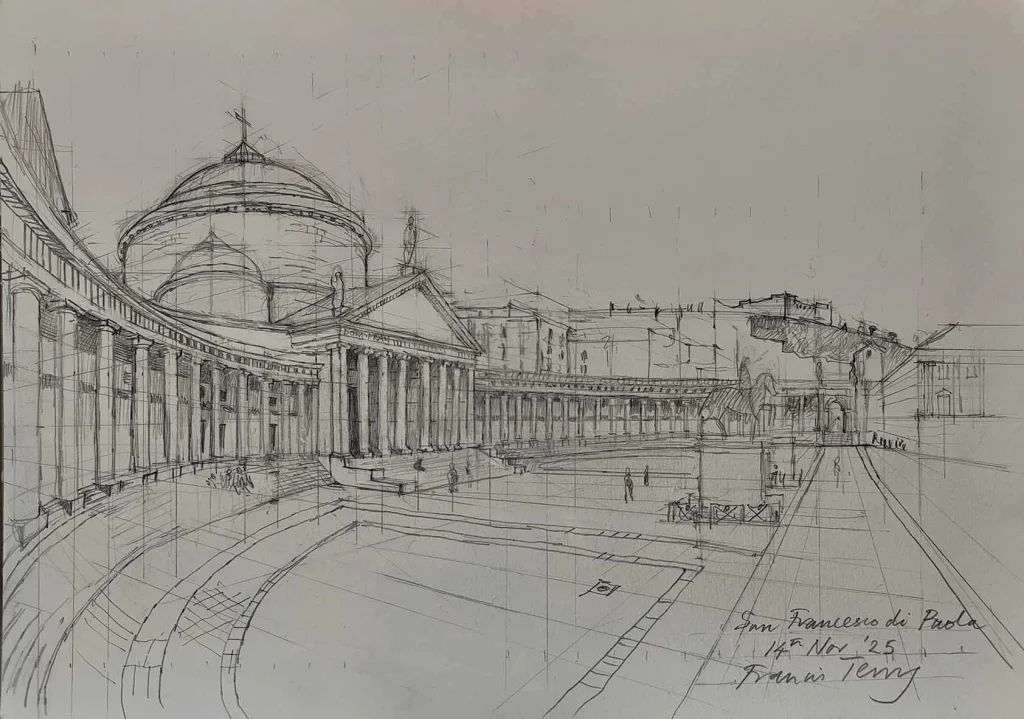
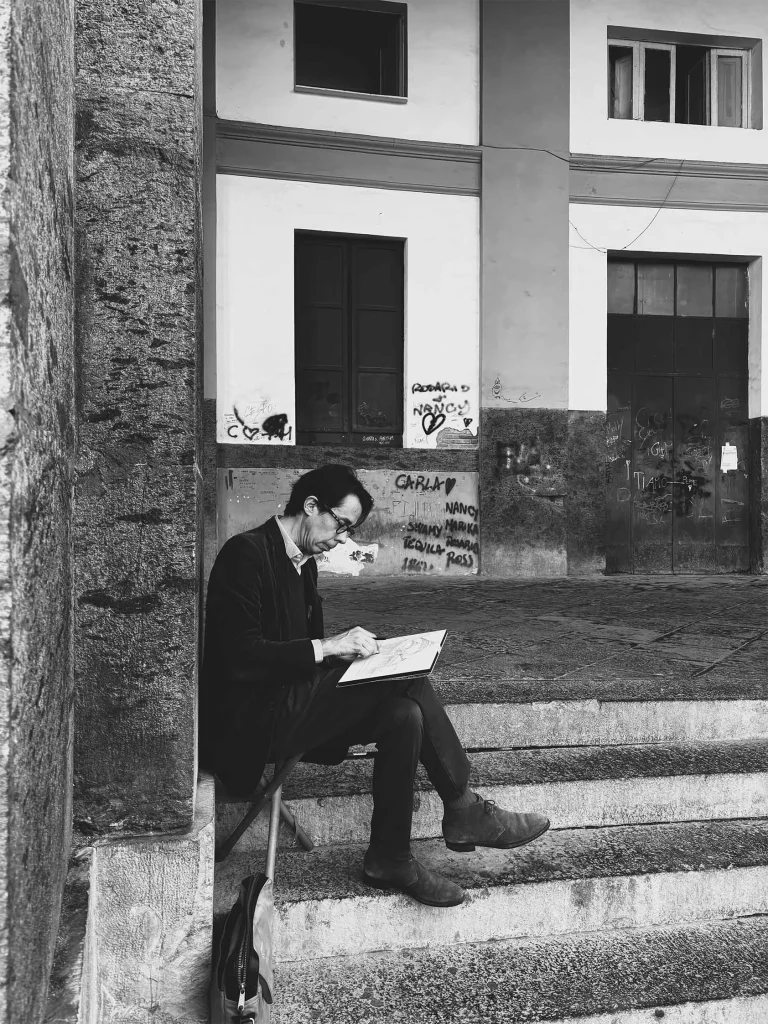
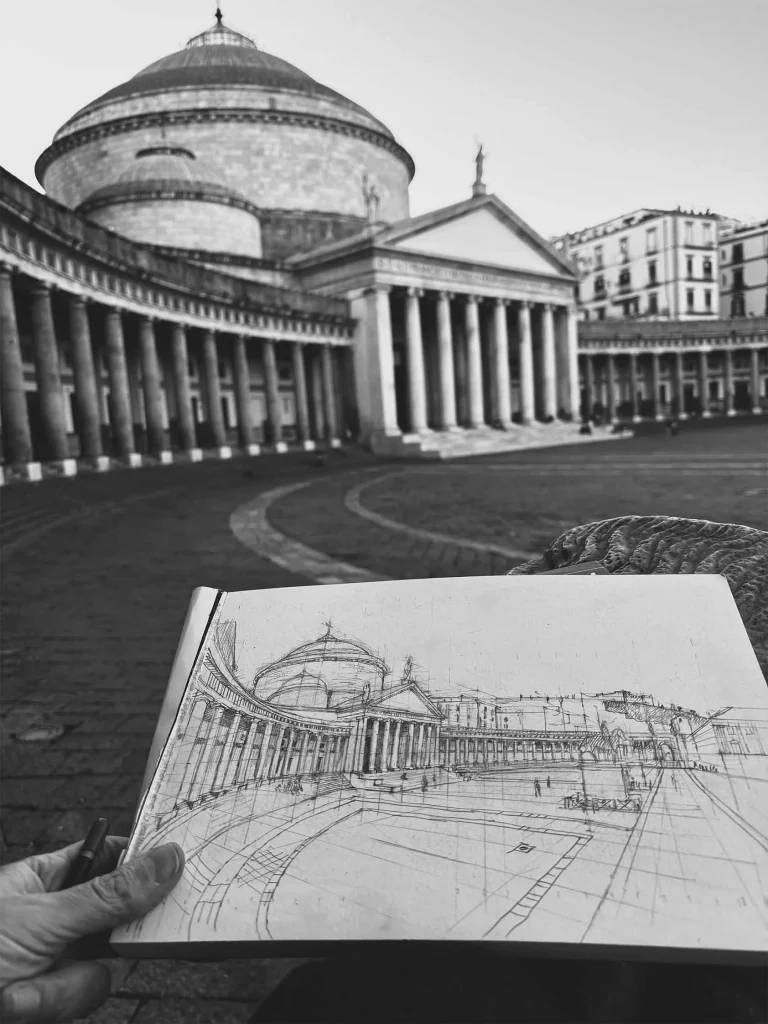
That afternoon, we headed over to San Francesco di Paola. This is a scaled down Pantheon with colonnade wings, rather like the Collège des Quatre-Nations in Paris, but far larger. It is a rather remarkable composition and George, and I sat down and drew it for about three hours.
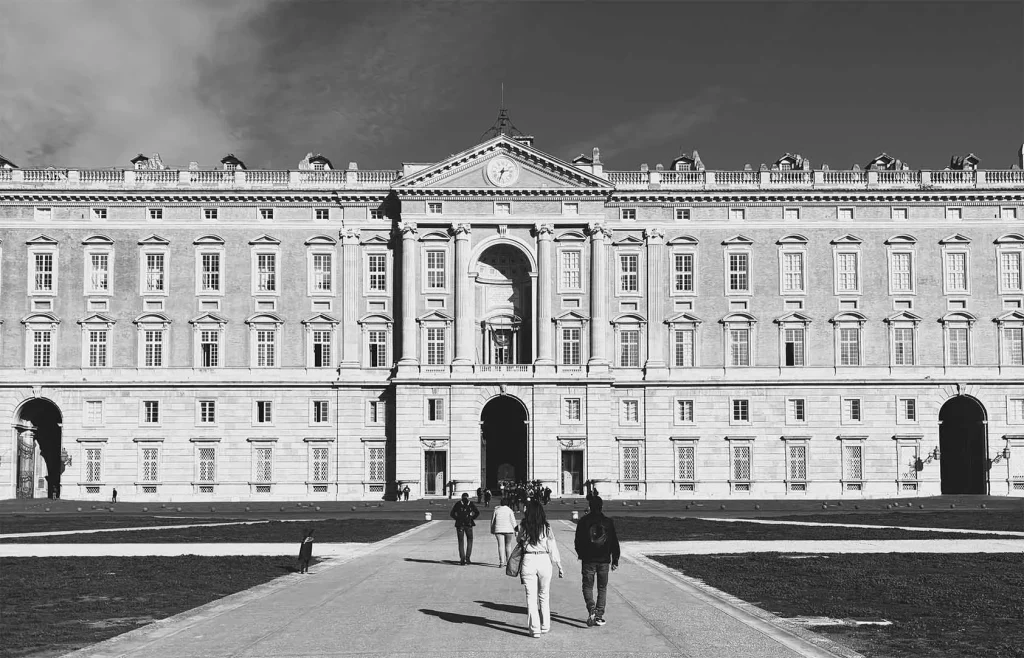
The next day (Saturday) we went to the Royal Palace at Caserta. This is a short train ride away. It is essentially Italy’s Versailles, built on a vast scale and depending how you measure it, it is bigger than the French original. The block itself is dull, a wasted opportunity. A massive block without any great interest, it is shock and awe, it seems to say, ‘I’m a King, this is my house …deal with it!’ But once in the palace you find yourself in an exterior under croft with columns and baroque shapes which are beautiful. You can also look right through the palace and see a series of formal lakes on axis which over the course of a mile step up the hill with grottos and sculptural compositions. We walked up this axis, which was more interesting in theory than practice.
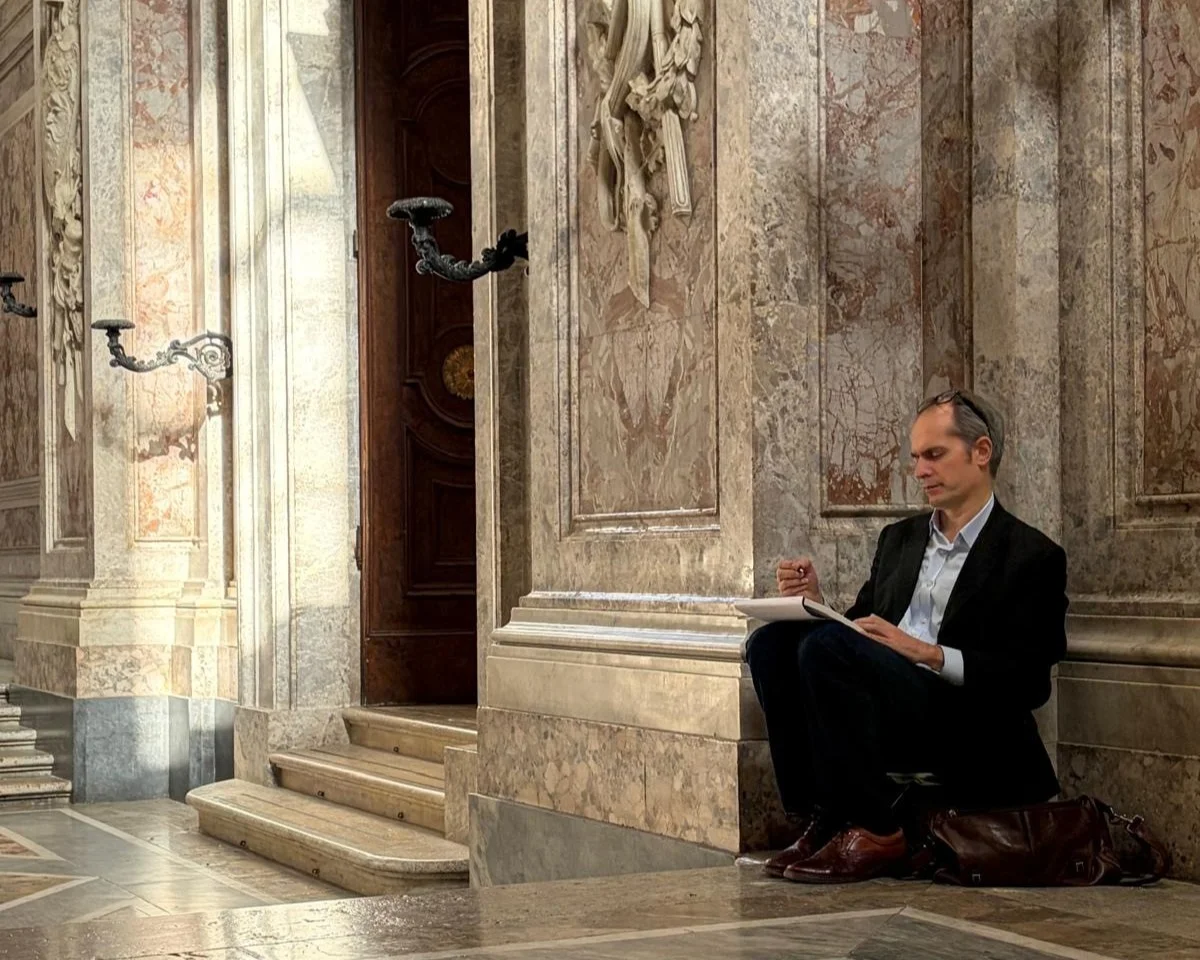
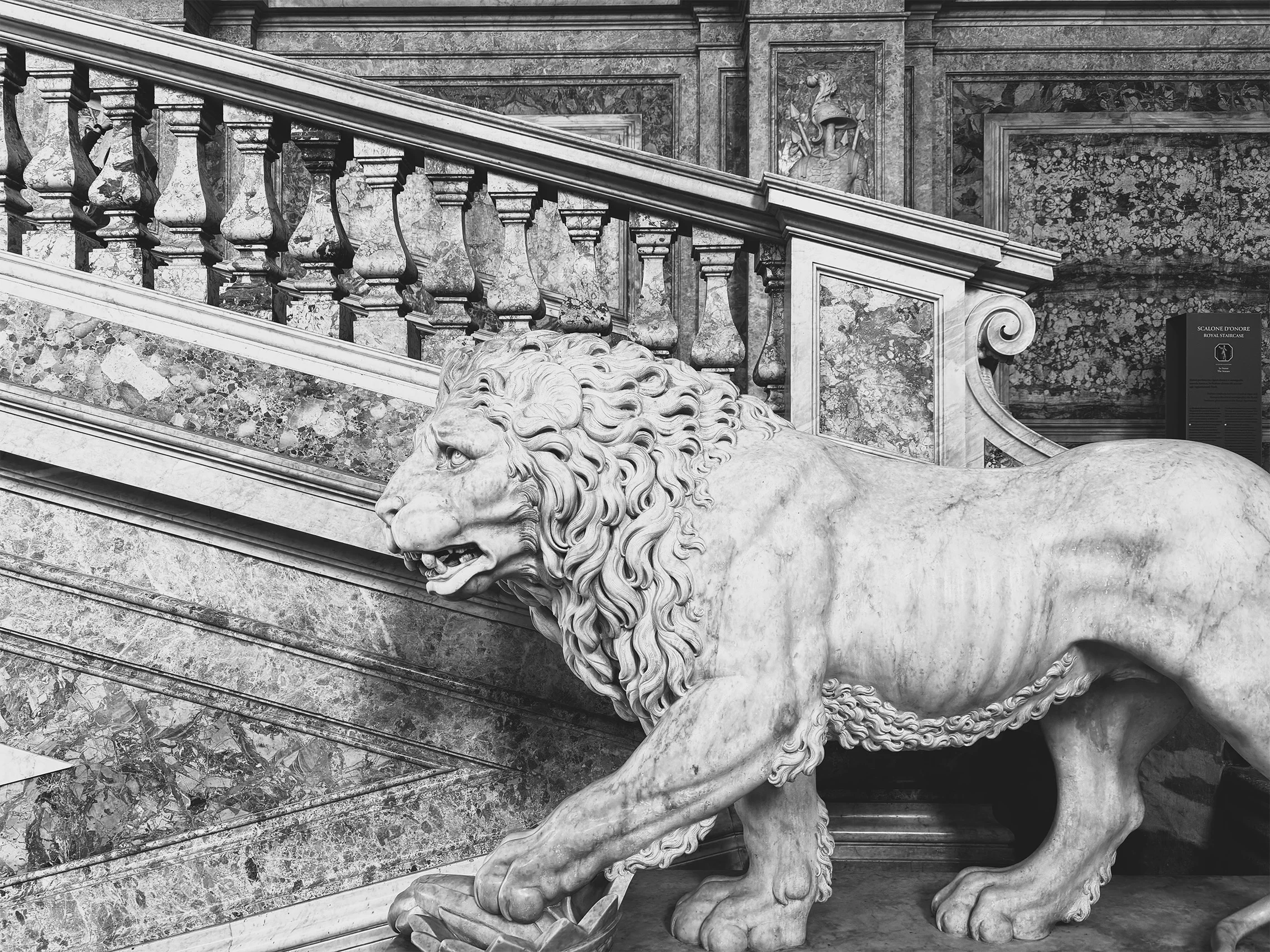
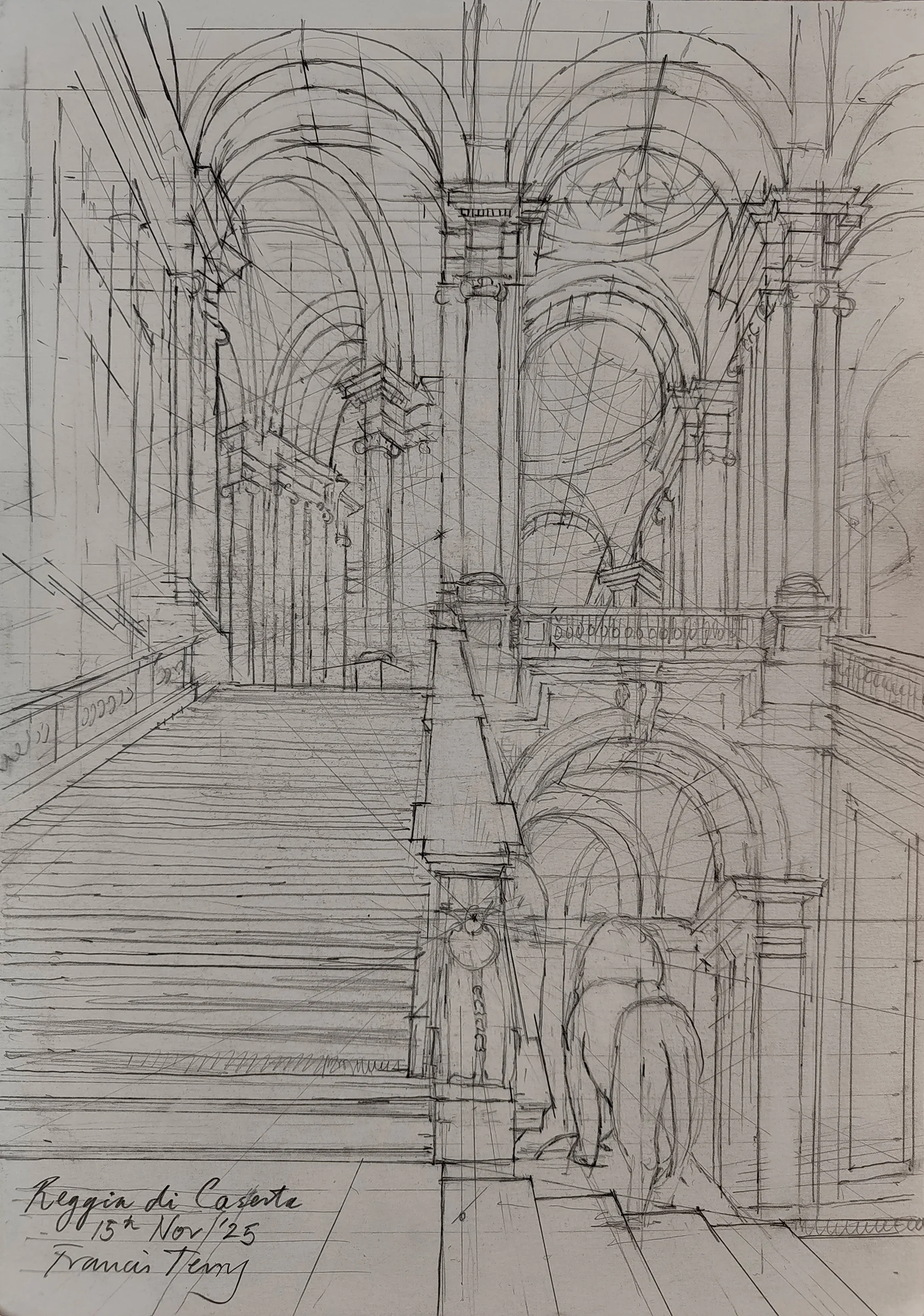
All this would make you feel that perhaps a trip to Caserta is a waste of time, and I would agree, if it was not for the staircase in the palace which takes you up to the piano nobile as if you were a character in a baroque opera. This is a journey into and through a stage set designed by Vanvitelli, an architect, stage set designer and artist. The experience is cinematic as each different baroque space unfolds and it has been used for many films, including Star Wars. This is the place we decided to sketch.
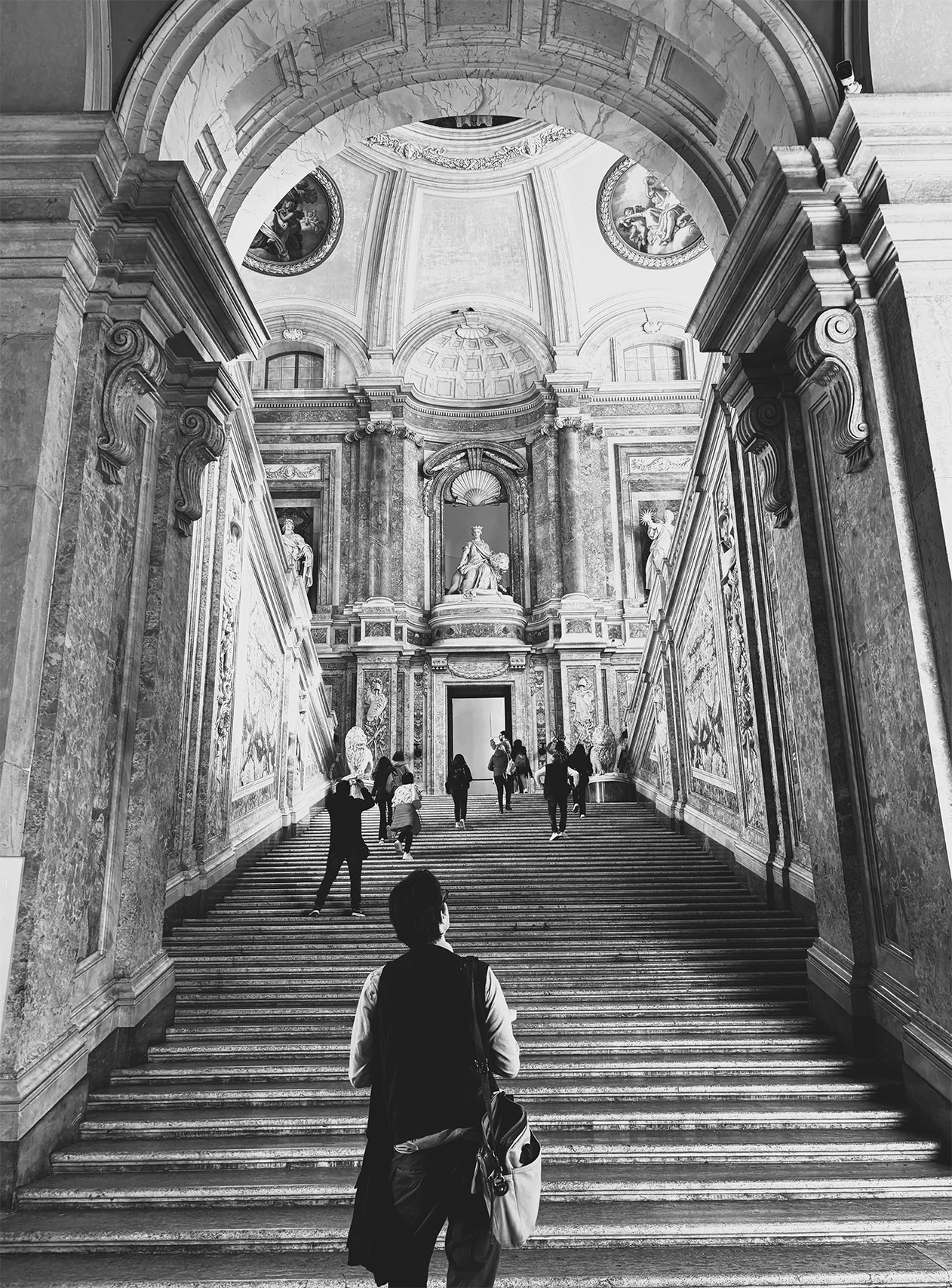
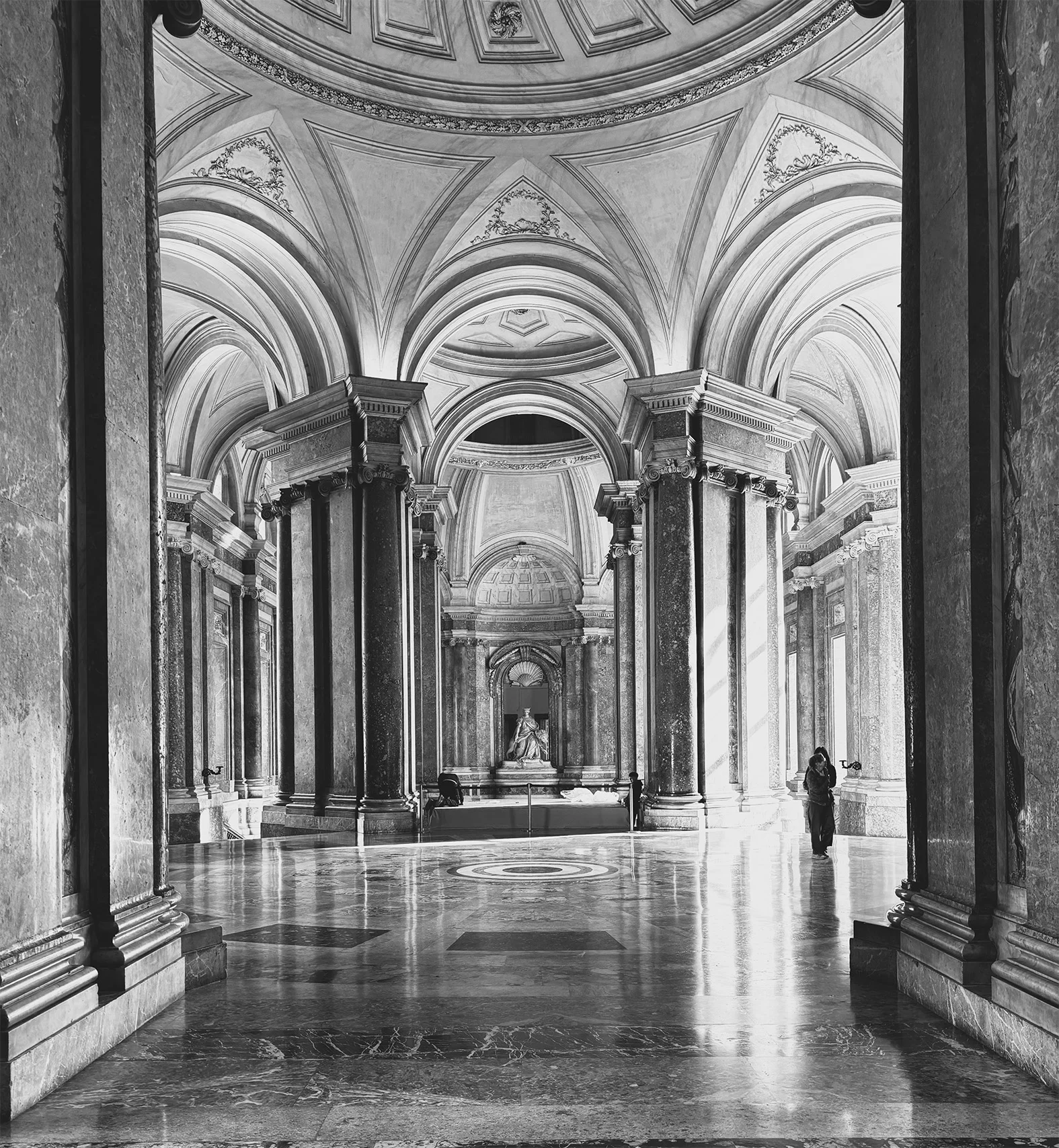
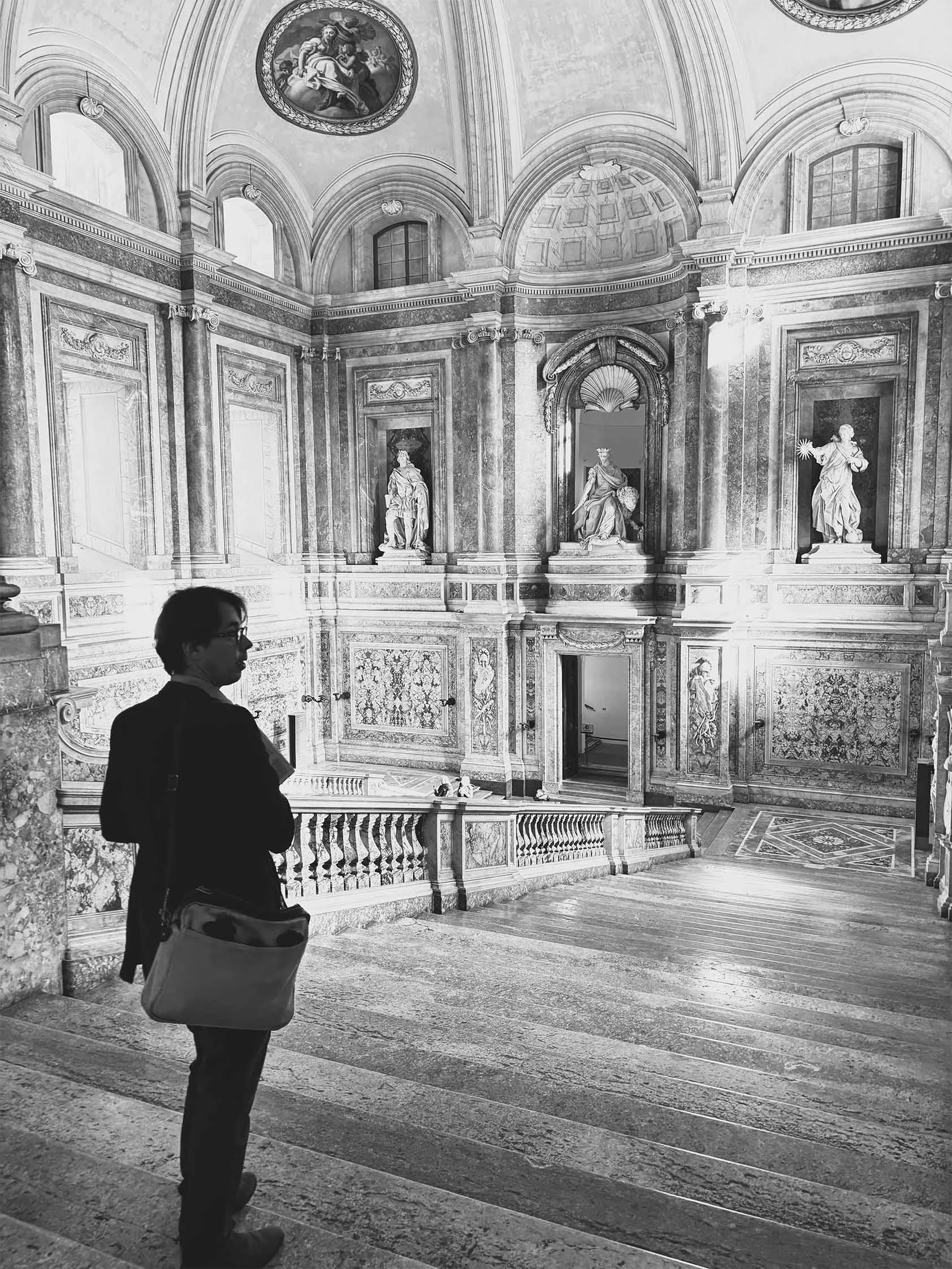
For my drawing, I sat on the half landing, which gave me a challenge. Though I was looking straight at the stairs and proscenium beyond, the staircase going up and down gave me two extra vanishing points. Also the hall on the first floor is elliptical giving even more vanishing points. The result is that a drawing which on one level is one point perspective needed no less than five vanishing points to structure the architecture. Needless to say, I did not have time to get my watercolours out.
George finished his sketch early and so went for a walk around the whole palace. This he worked out was a walk of about half a mile through completely dull historic rooms, not made any better by contemporary art installations. He advised me not to bother, advice which I followed.
It did make me wonder how an architect could have designed a staircase of such unrivalled poetry and then all the other rooms in the house were completely lacking in architectural merit. Did Vanvitelli spend all his time doing the staircase and did not have time or the energy to do the rest? Or did the king say, ‘do me a nice staircase and don’t worry about the rest.’
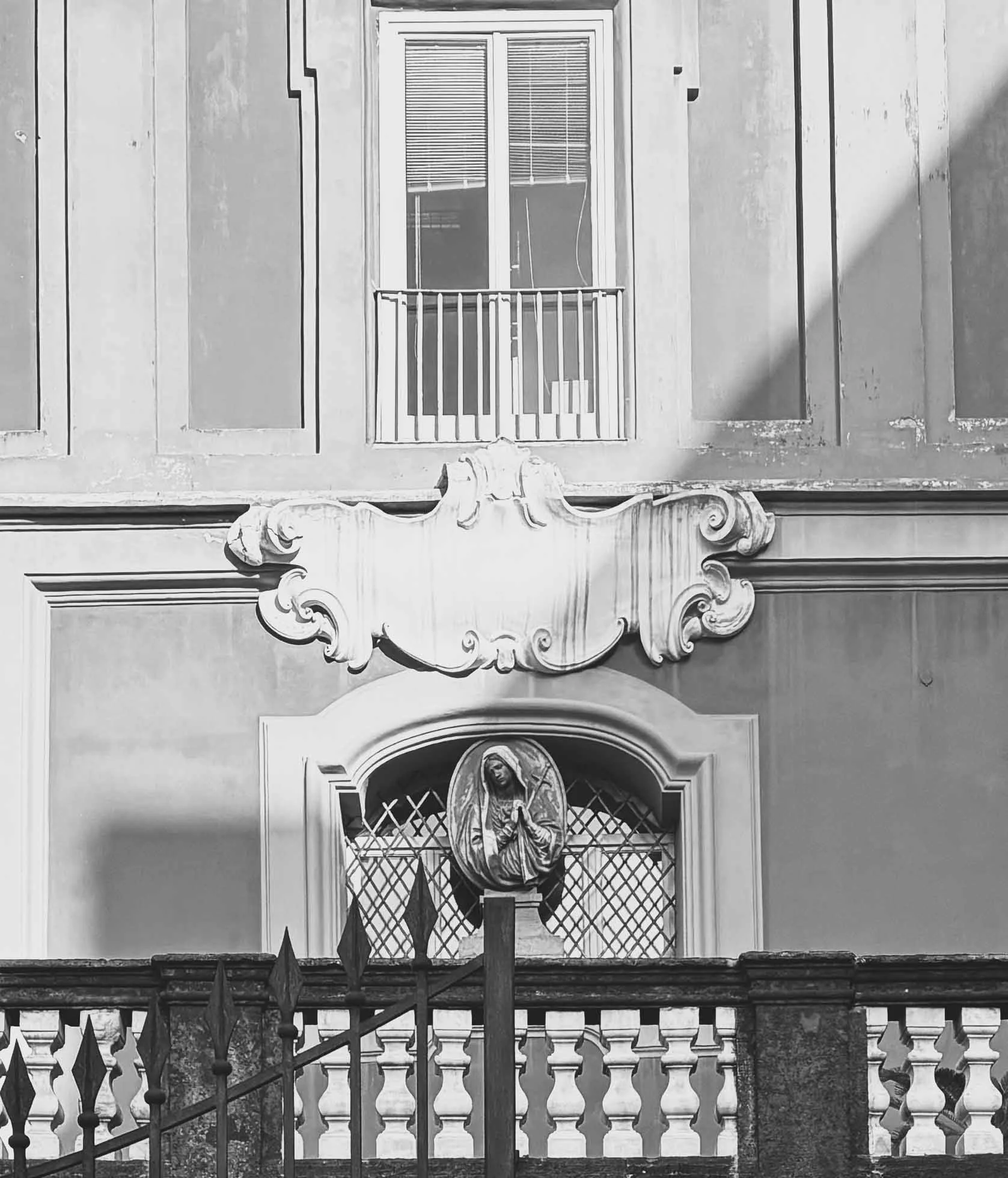
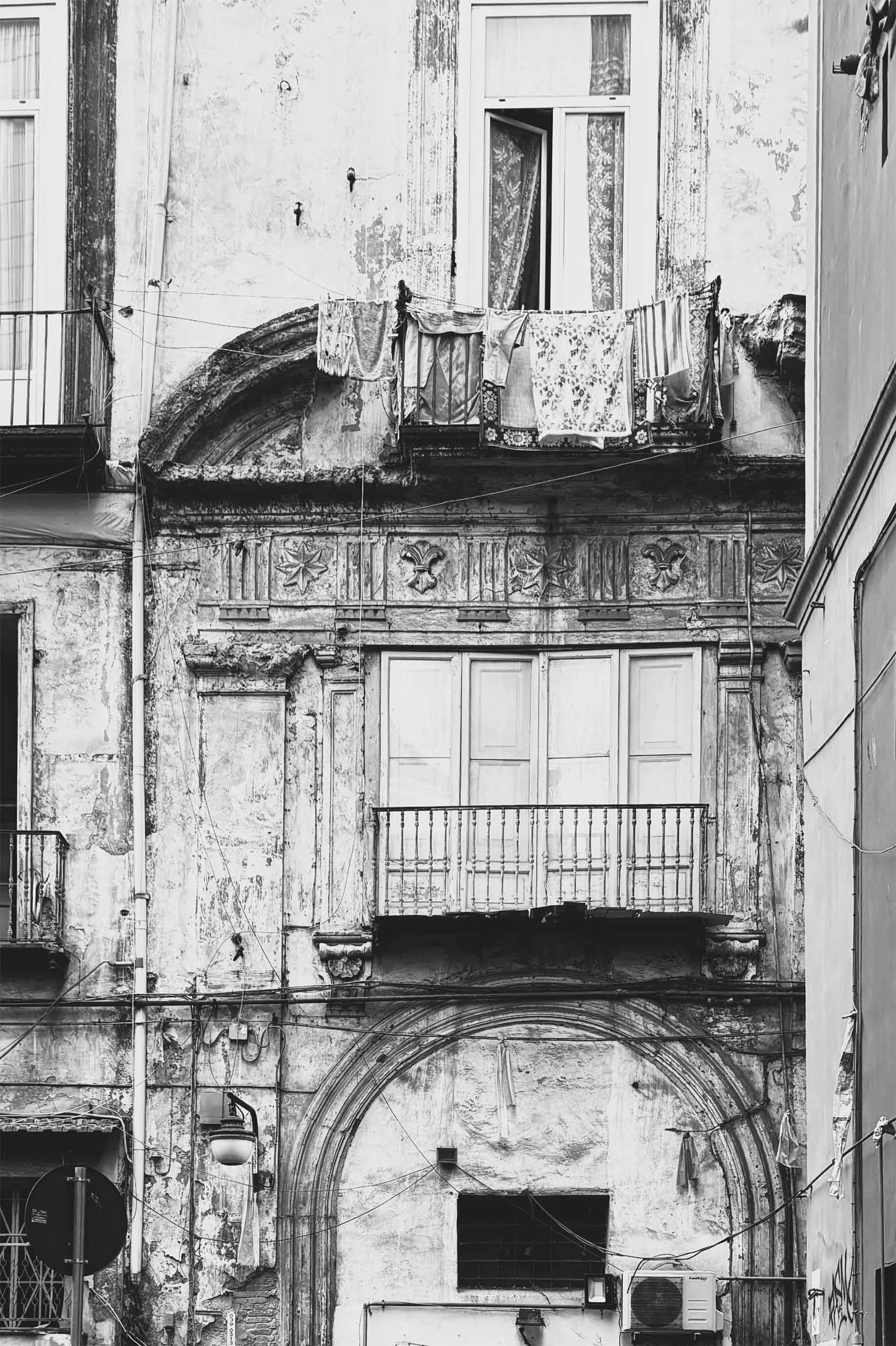
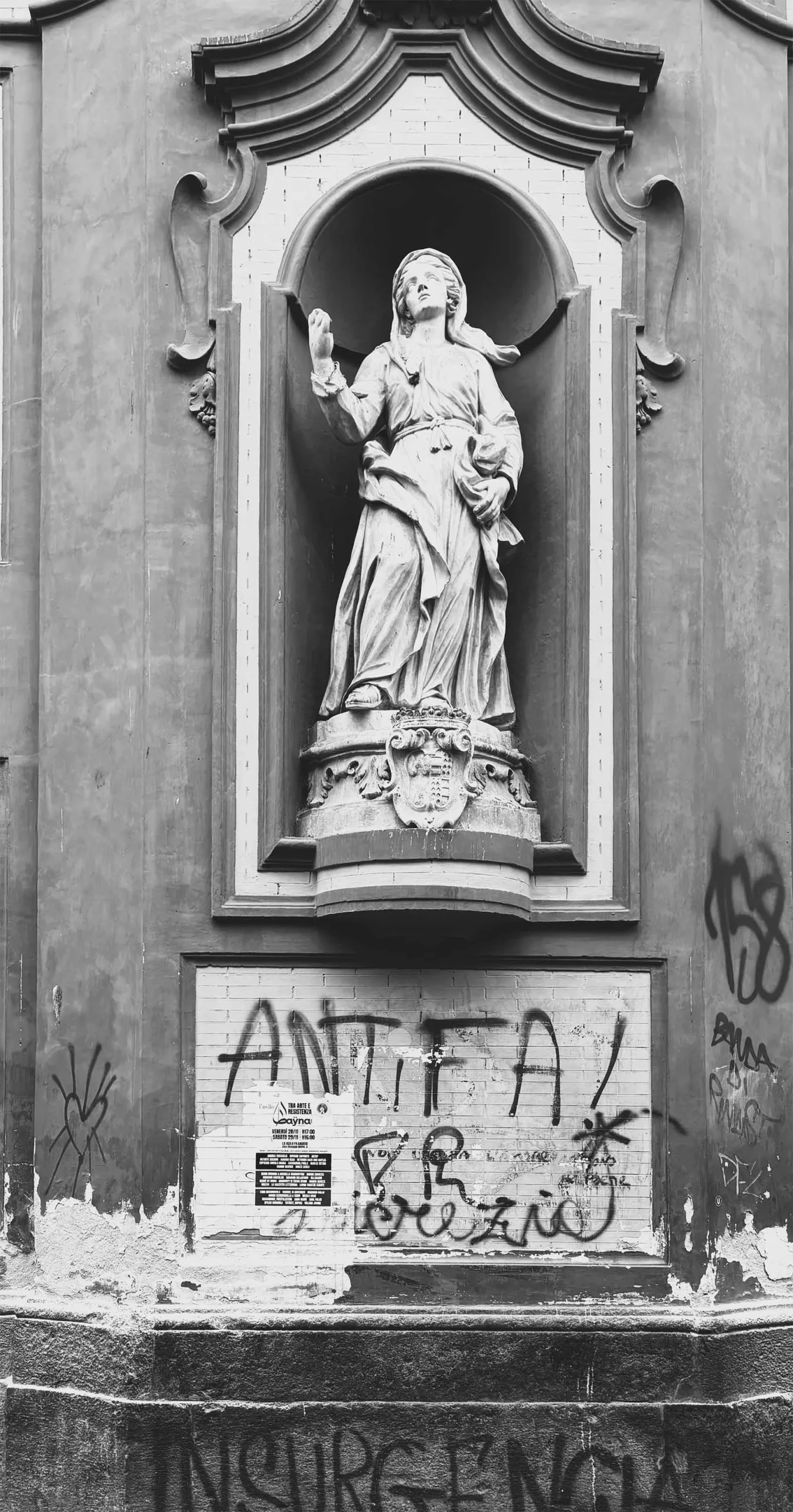
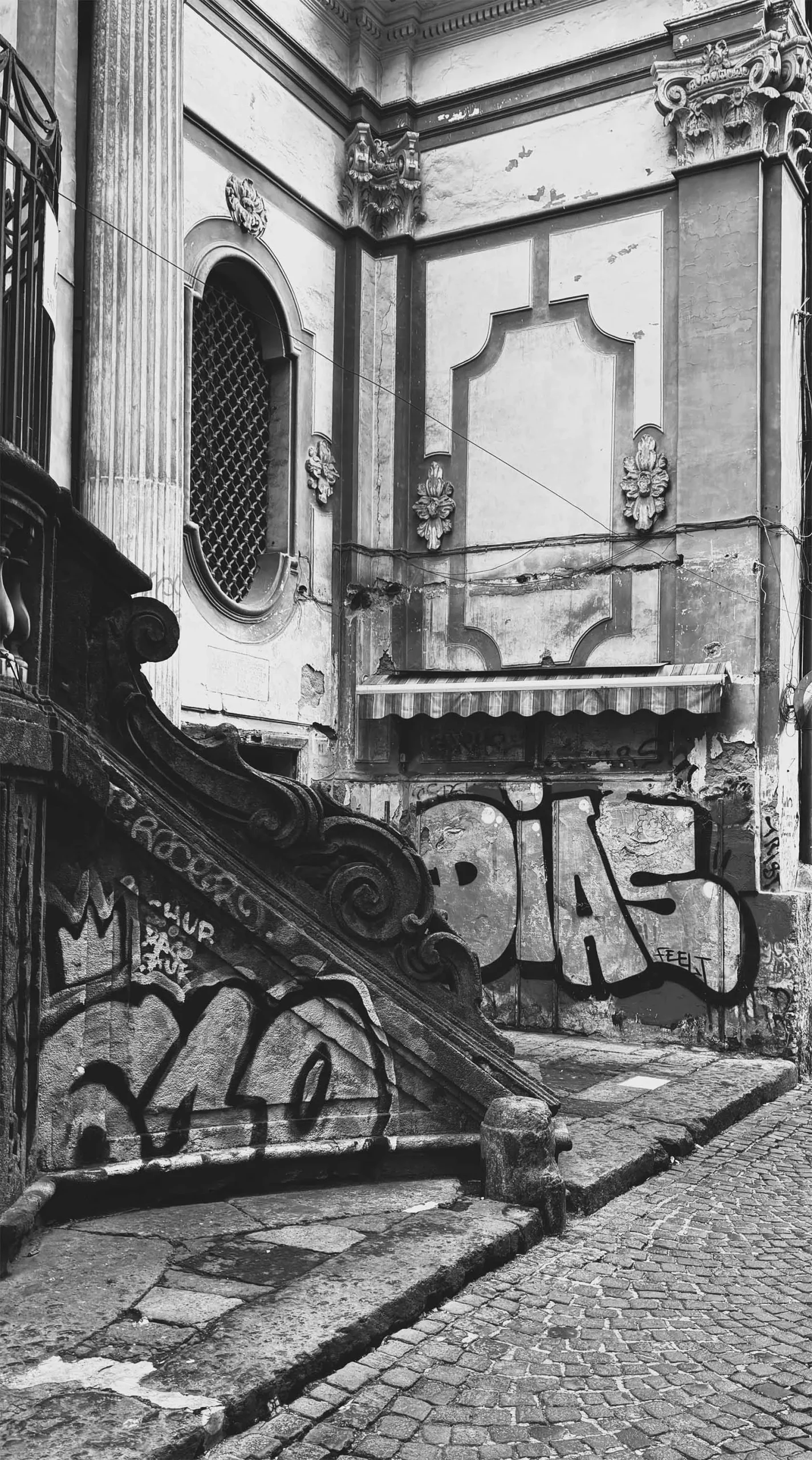
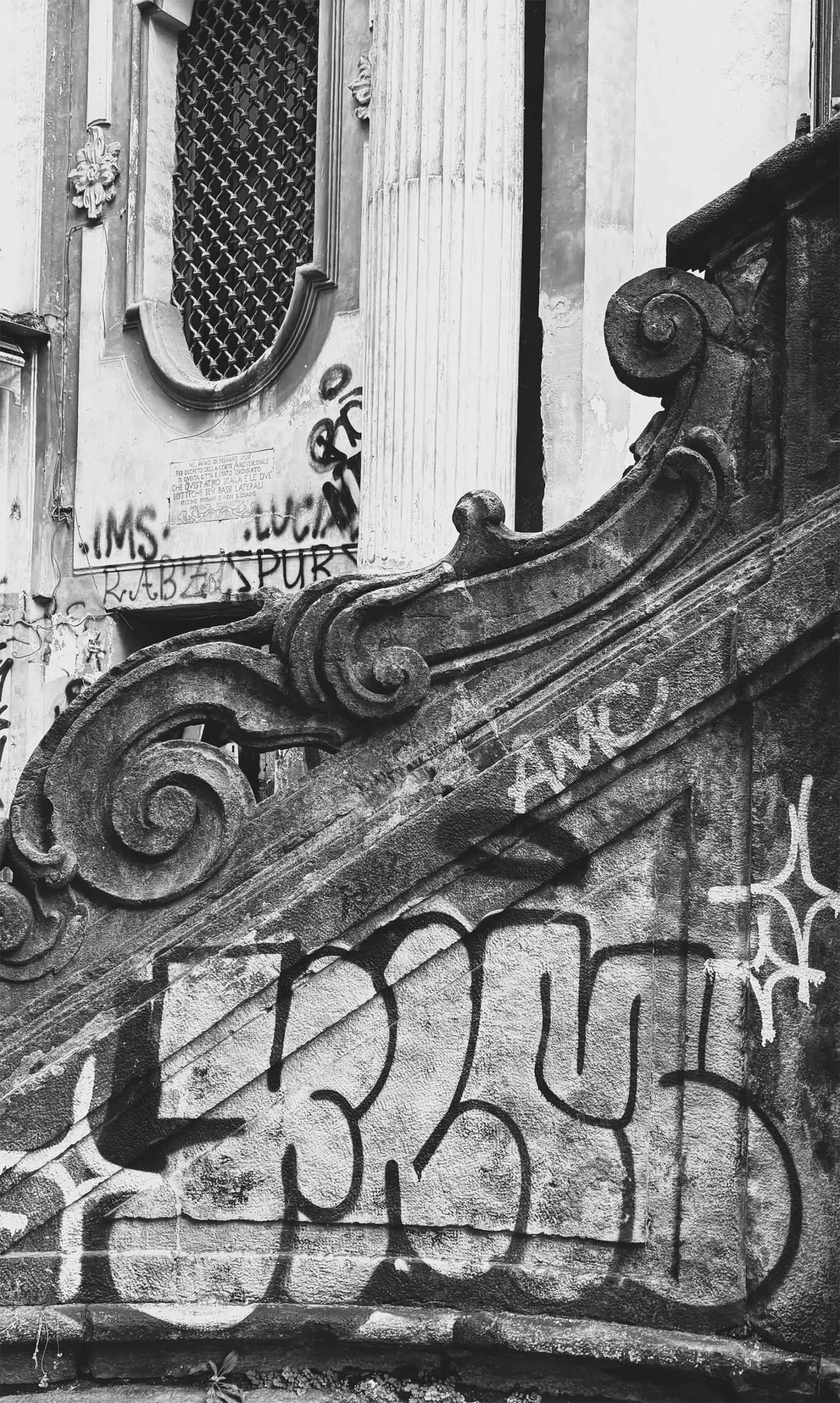
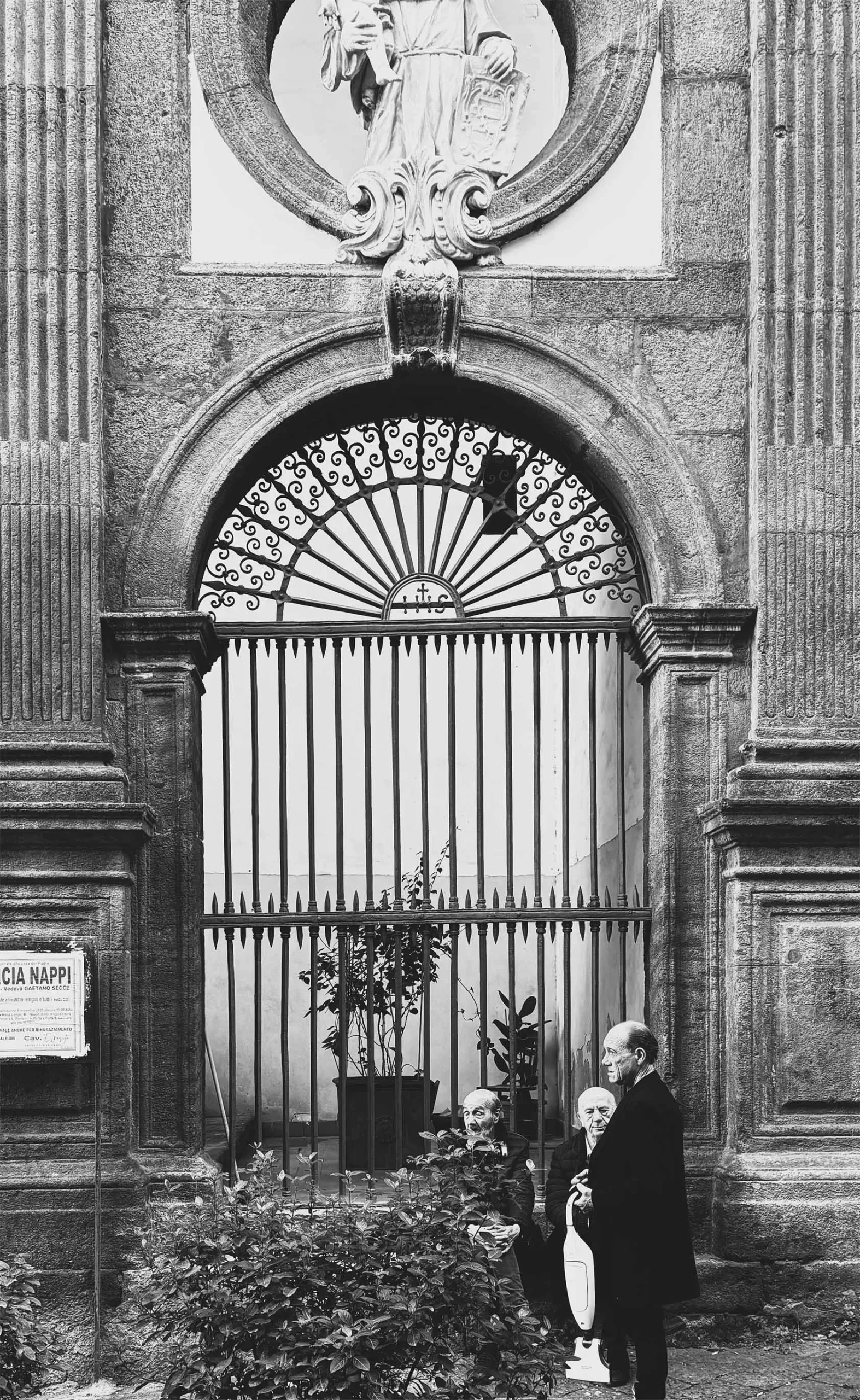
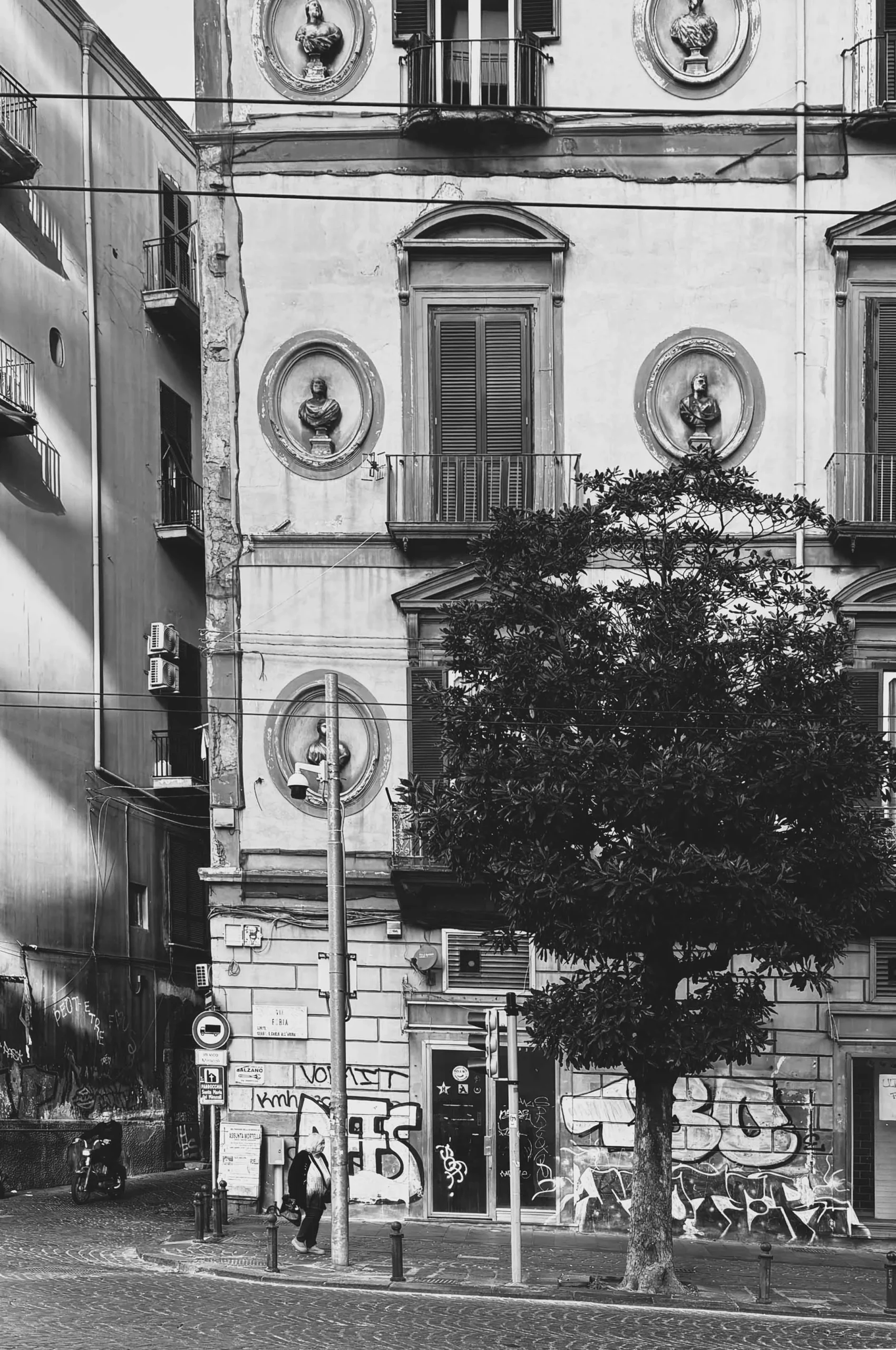
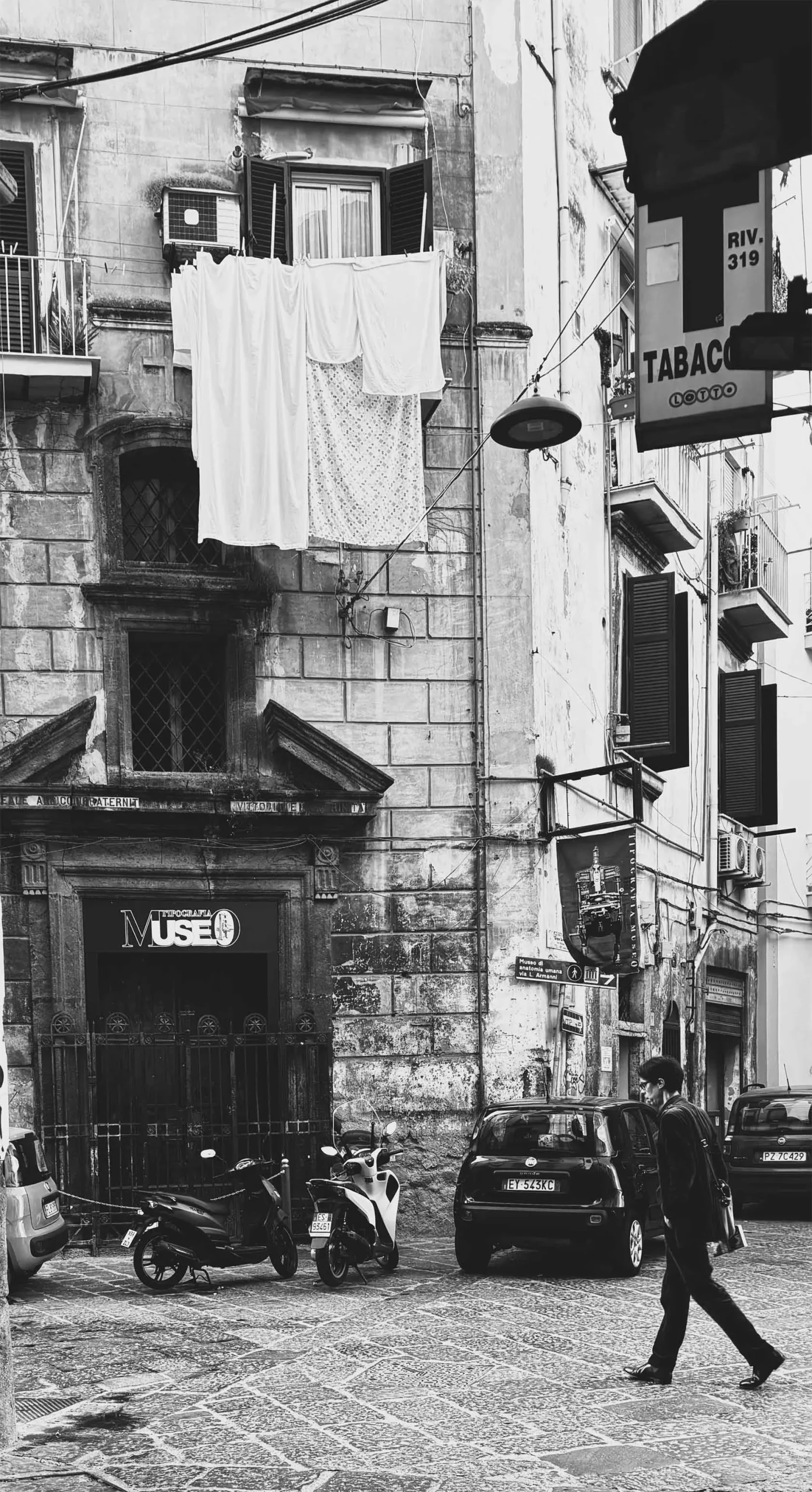
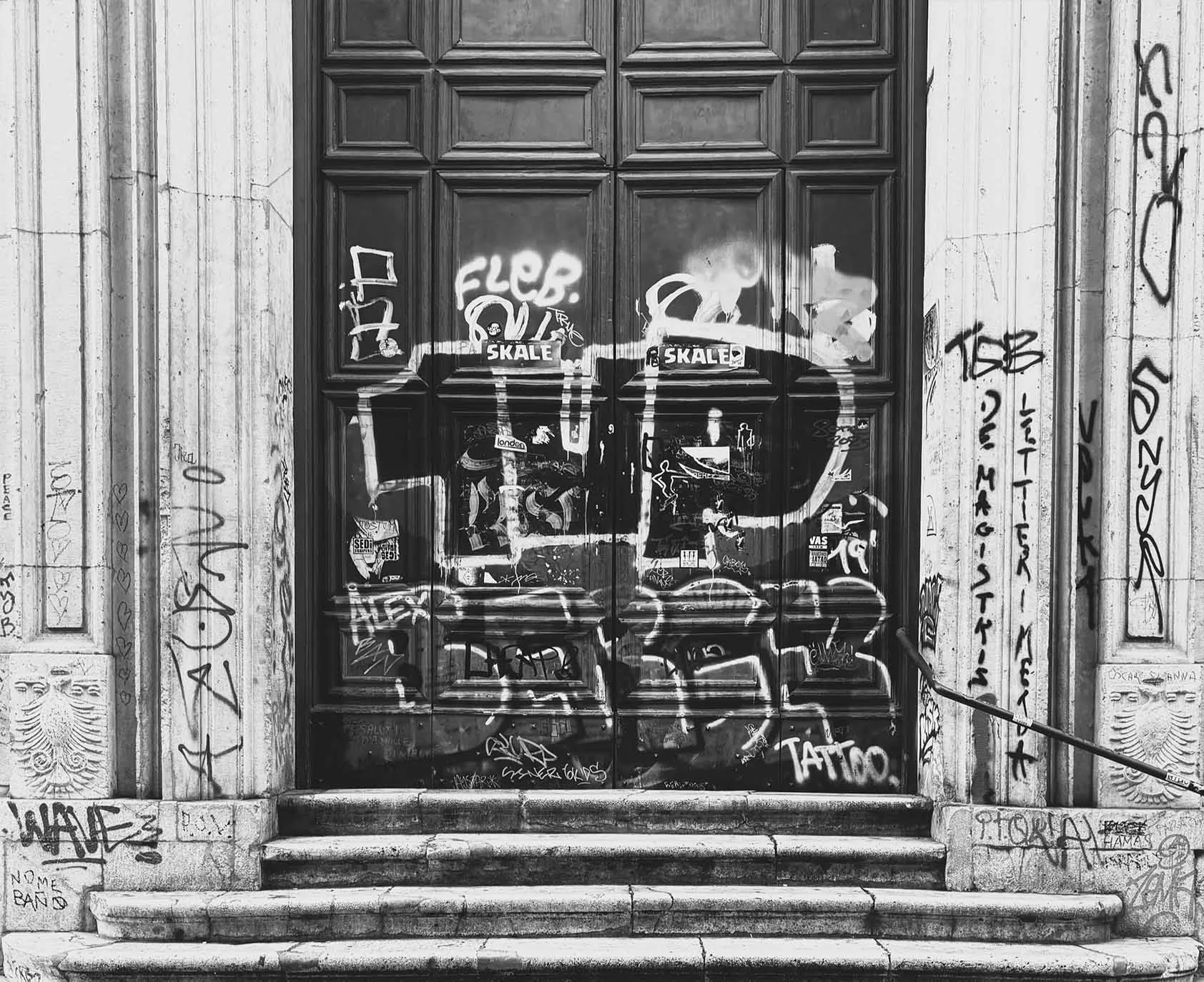
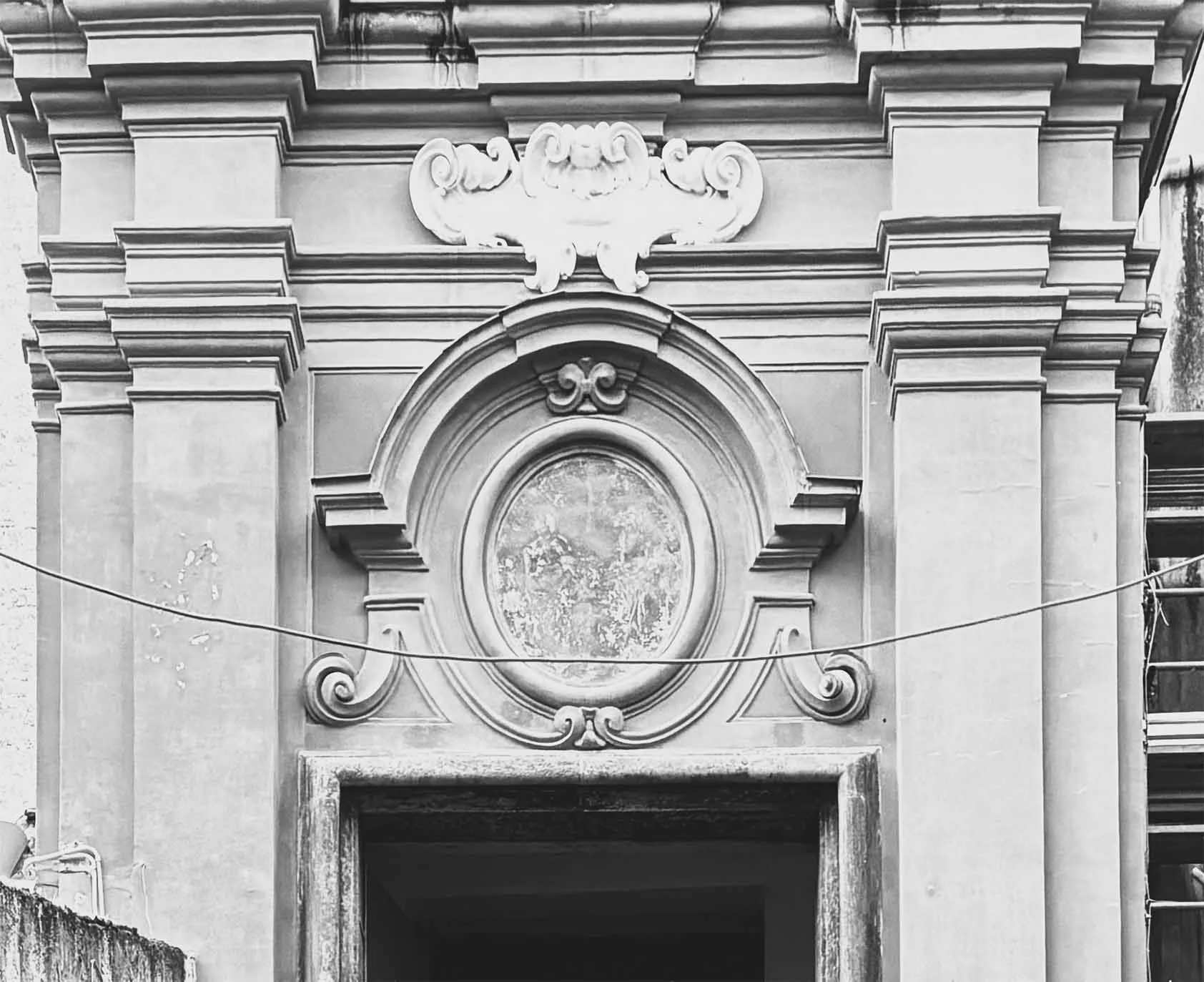
On our final day we walked through the tight-knit streets of Naples. Graffiti, cafés, bars, Madonna and Maradona figurines, baroque church fronts, air conditioners precariously fixed to crumbling walls, laundry hung out to dry and shrines to obscure saints with dead flowers all crowded the streets like the flora and fauna on a rainforest floor. High above, in flats behind shutters, I imagined a new generation of grandmothers pressing pasta with the same thumbprint rhythm I remembered from my first visit. The slow process of sketching gives you time to not only absorb the architecture but also the sounds, smells and spirit of a city and though I have not sketched any grandmothers making pasta, I did feel that this time, I had, at last, seen Naples.