What was Vanbrugh’s relationship to Hawksmoor?
What was Vanbrugh’s relationship to Hawksmoor?
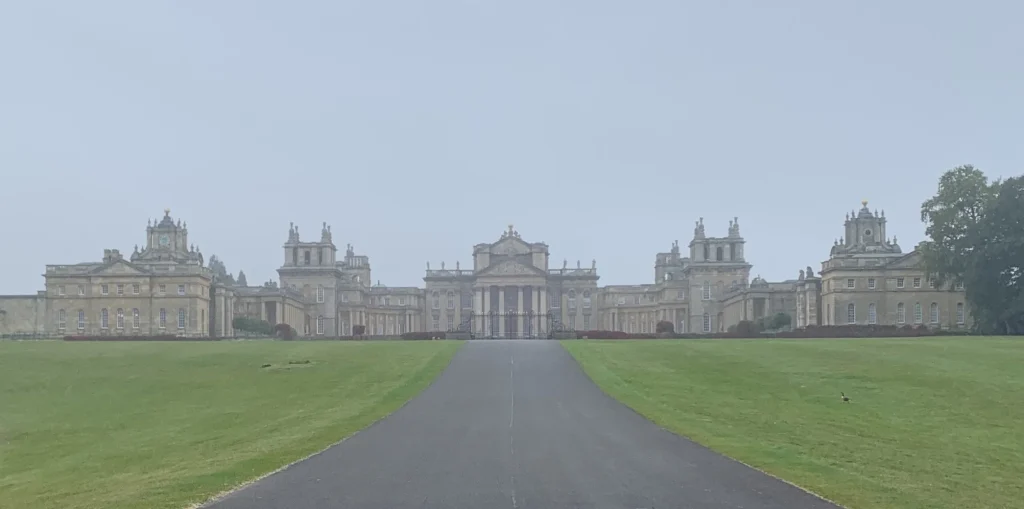
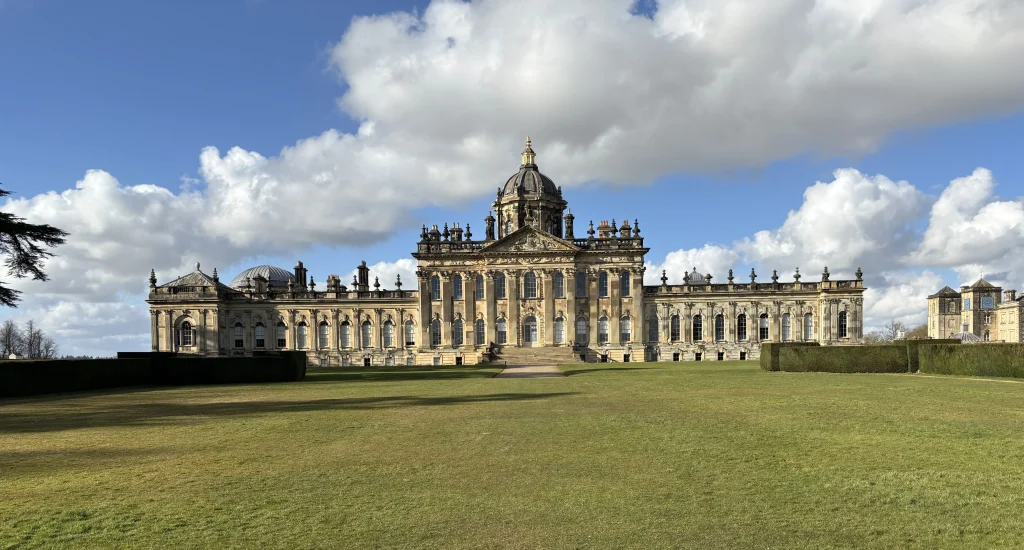
This question comes up whenever the two are discussed and is central to understanding the creative process behind the design of all their collaborations, including Castle Howard, Blenheim and all their other major commissions.
Vanbrugh took to architecture late, starting with Castle Howard, his first commission at the age of thirty-five. At that point he would have known virtually nothing about architecture having been a trader in India, a soldier, a prisoner and a playwright. Hawksmoor, by contrast, had the good fortune to be employed by Sir Christopher Wren from a young age and so he knew everything there was to be known about architecture and building. Their relationship can be seen one of two ways, either it is a case of Vanbrugh, the privileged posh kid exploiting the skills of Hawksmoor, an architect from a more modest background to further his ambition and wealth or was this a partnership of mutual respect where they both benefited from their different skills.
From my own experience, I find this incredibly easy to imagine. When I started working for my father at the beginning of my career, I was thrown into an office of highly competent draftsmen who, by the same age, had site experience, knew the building regs, understood construction and could draw accurately and fast. I meanwhile had spent years at Cambridge, listening to lectures on theory and history, designing seal sanctuaries and puppet museums for my tutors and stage sets for varies student theatre companies. I also aspired to be an artist and for a few years I had been a portrait painter. All these pursuits had their uses, but not in an architect’s office. I felt insecure, I naturally realised that I could never be the equal of my contemporaries in my father’s office, I had to offer something else.
From my time at Cambridge, I had met some fascinating people and as I was not in full time employment, I had the opportunity to think about architecture in a way that can not be done during the cut and thrust of office life. I also travelled a great deal with my sketchbook in hand. None of this was relevant for the practicalities of building, but I did have a different perspective and a facility as an artist which I had honed over the years. What I found was that some of my contemporaries in my father’s office rightly saw me as an over privileged posh boy who had only got his position because of his father, and they would be right. Others, who are now among my closest friends and long-time collaborators saw that I did not have their technical expertise but they also saw my ability to draw and the knowledge I had gained through countless lectures and discussions about history and theory could be of use and potentially give that spark that turns mere construction into architecture.
I feel the relationship between Vanbrugh and Hawksmoor would be akin to the latter group. If Hawksmoor was resentful of Vanbrugh, their partnership would not have spanned the whole of Vanbrugh’s career. There is a way of looking at history, which is extremely popular today, which divides the world into the oppressor and the oppressed, it probably comes from Marx. Although this is true for some relationships throughout history, it does not work for all. More often than not people live with their differences and use them to their advantage. How else would we have survived the Ice Age and hunted the woolly mammoth to extinction?
In a lecture for the Vanbrugh Symposium, I heard James Legard explain how the two architects collaborated. Vanbrugh would draw a design for a house in plan and elevation, Hawksmoor would then redraw this design, refining it and making it buildable. This is exactly what happens in my office when my rough sketches get converted into CAD drawings, and as part of this process the original design becomes a set of drawings that can be used by subcontractors and on a building site.
Surprising as it may seem, it is often an advantage if the architect at the helm does not have a detailed understanding of construction and the building regs. Over thinking these issues at the concept stage can stifle creativity. My associates often say to me, “Design what you want, and we will make it work.” This allows me creative freedom at this initial stage. If I have designed something which is impossible to build, the associate will then give me choices to make it work. I feel this is a better approach than thinking too much about construction and building regs too early in the process which will give you a very dull building, easy to build, but that’s about it.
From Vanbrugh’s correspondence, he seems a likable cove and his success in so many fields would have been impossible without an abundance of personal charm. How else would he have convinced the 3rd Earl of Carlisle to commission him to design his house with no prior experience? I do not see Hawksmoor as a repressed jealous draftsman who resentfully drew out Vanbrugh’s designs, I see him as a highly skilled architect who took a certain pleasure in resolving the design challenges that Vanbrugh put in front of him. I am sure there was a certain amount of veiled exasperation and eye rolling when a new crazy design born out of naivety dropped on to his board, but I feel that Hawksmoor would have greeted it with humour, excitement and a genuine desire to resolve the design of his friend in a way that kept Vanbrugh’s original intention and further proved the strength of the partnership.
Like all good collaborations they needed each other and this can only work in the long term if there is mutual respect and affection. The resulting buildings are rightly regarded as some of the greatest buildings ever built on English soil.